Skip to content
  • facebook.com
  • twitter.com
  • t.me
  • instagram.com
  • youtube.com
Marine Engineering

Engineering the Power Behind Every Voyage.

Subscribe
  • Home
  • Online Tools
  • Marine Engineering App
  • Home
  • cavitation
🚢 Reasons Why Ships Lose Propulsion Efficiency During Long-Term Operation
Posted inFeatured

🚢 Reasons Why Ships Lose Propulsion Efficiency During Long-Term Operation

Posted by admin October 17, 2026
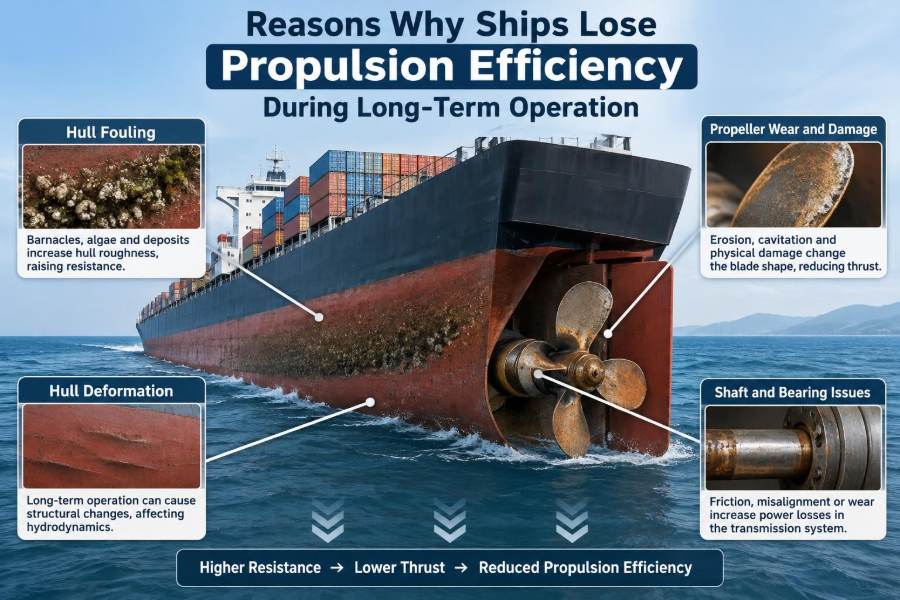
Hull slime, propeller damage, engine fouling, and poor data comparisons can all quietly reduce ship performance. Learn where the energy goes and what to check first. 🌊🔧📊
Read More
🚢 How Powerful Are Modern Marine Engines and How Do They Move Massive Cargo Ships?
Posted inFeatured

🚢 How Powerful Are Modern Marine Engines and How Do They Move Massive Cargo Ships?

Posted by admin October 16, 2026
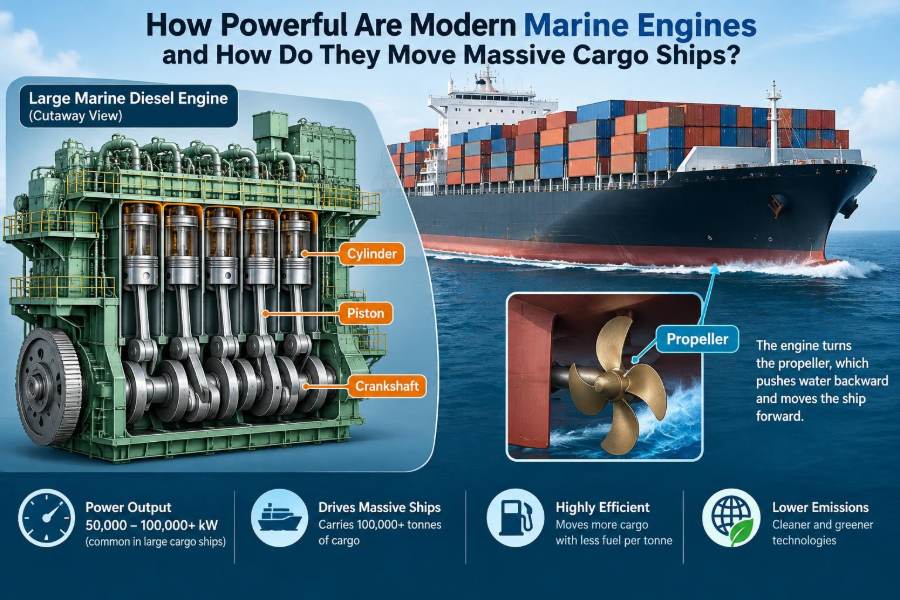
From huge low-speed diesels to propellers, torque, cavitation, and fuel-saving tactics, see how marine engineers turn engine power into ocean-crossing thrust. ⚙️🌊🚢
Read More
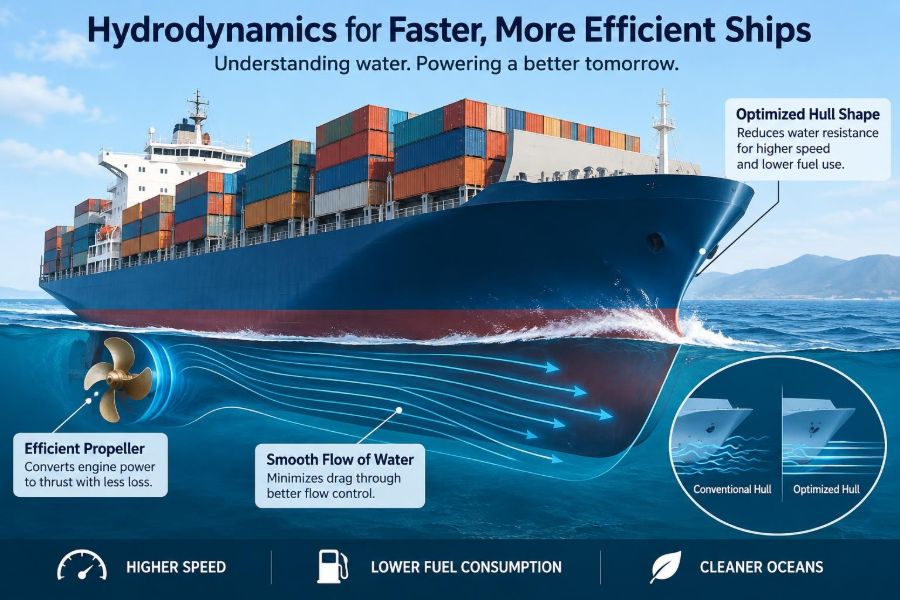
🚢 Discoveries in Hydrodynamics That Made Modern Ships Faster and More Efficient
Posted inFeatured

🚢 Discoveries in Hydrodynamics That Made Modern Ships Faster and More Efficient

Posted by admin October 11, 2026
From Froude’s model tests to propeller cavitation and CFD, discover the flow science that cuts wasted energy at sea—and what crews can do to protect it. 🌊⚙️📉
Read More
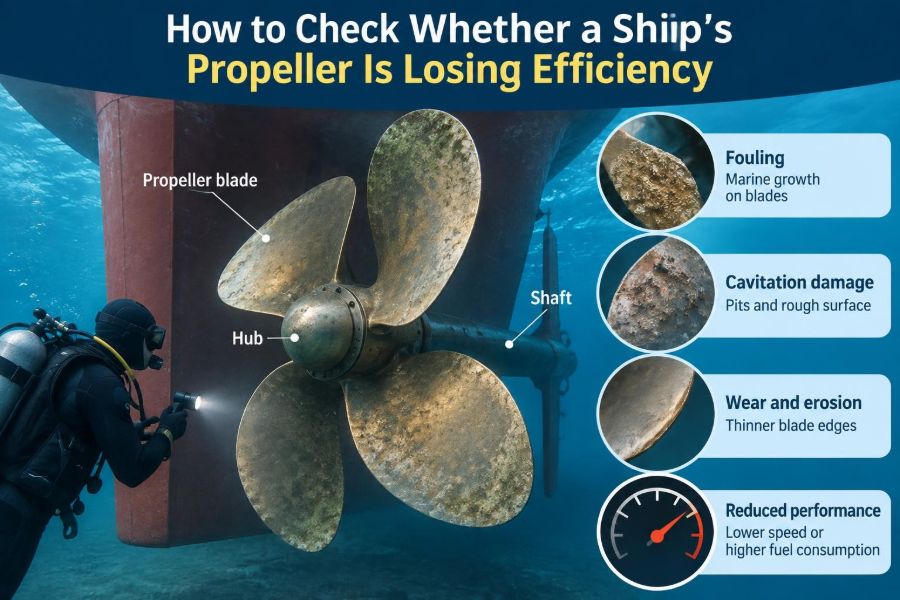
🚢 How to Check Whether a Ship’s Propeller Is Losing Efficiency
Posted inFeatured

🚢 How to Check Whether a Ship’s Propeller Is Losing Efficiency

Posted by admin October 5, 2026
Learn how to spot speed–power drift, separate hull fouling from propeller faults, and plan a sound inspection before small losses become costly problems. ⚙️🌊📊
Read More
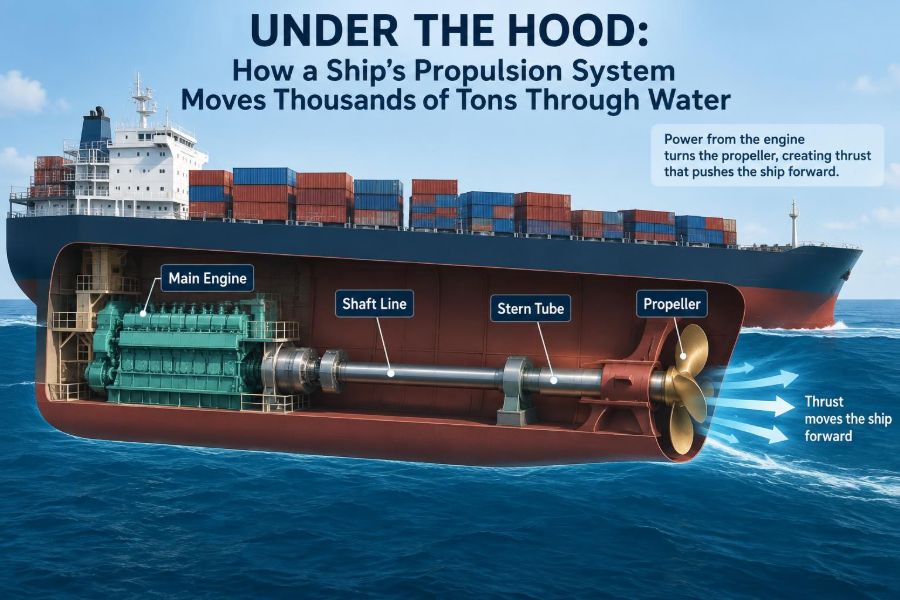
🚢 Under the Hood: How a Ship’s Propulsion System Moves Thousands of Tons Through Water
Posted inFeatured

🚢 Under the Hood: How a Ship’s Propulsion System Moves Thousands of Tons Through Water

Posted by admin September 29, 2026
Follow the energy path from engine combustion to propeller thrust—and learn why a clean hull, healthy shaft line, and smart controls matter at sea. 🌊🔧⚓
Read More
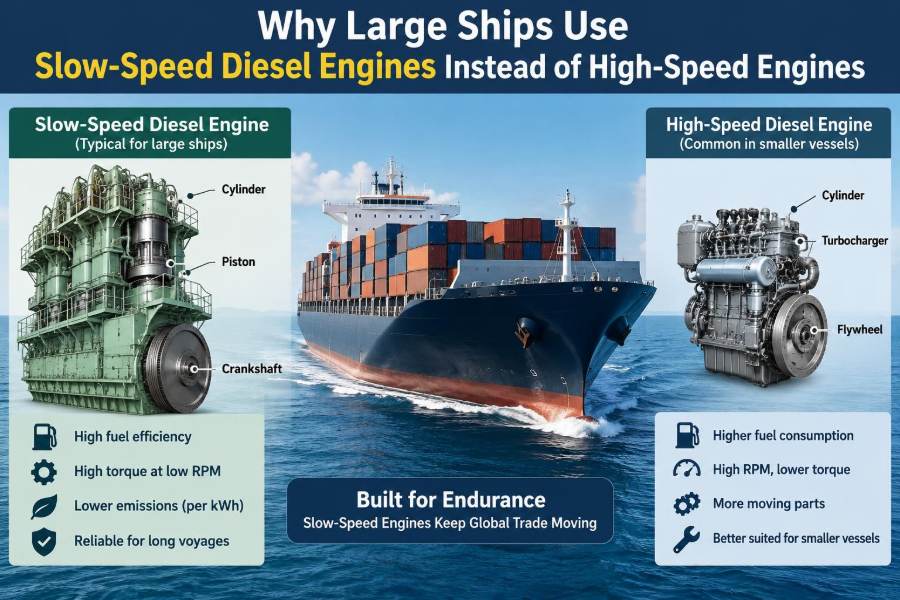
🚢 Why Large Ships Use Slow-Speed Diesel Engines Instead of High-Speed Engines
Posted inFeatured

🚢 Why Large Ships Use Slow-Speed Diesel Engines Instead of High-Speed Engines

Posted by admin September 23, 2026
A ship engine may turn at only a fraction of car-engine rpm—and that is exactly the point. Explore torque, propellers, cavitation, fuel use, and direct drive. ⚙️🌊🚢
Read More
🚢 How Ship Rudder Bulbs and Energy-Saving Devices Cut Fuel Consumption
Posted inFeatured

🚢 How Ship Rudder Bulbs and Energy-Saving Devices Cut Fuel Consumption

Posted by admin September 16, 2026
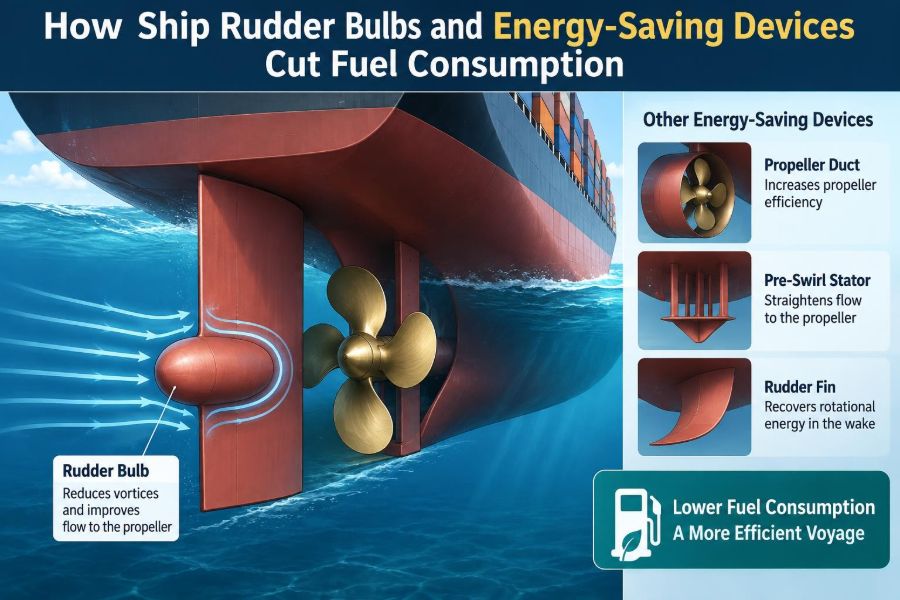
Discover how rudder bulbs, ducts, fins and boss-cap devices manage propeller swirl and stern flow—and why the right retrofit must fit the whole vessel. ⚙️🌊🚢
Read More

Recent Posts

  • 🚢 Inside a Ship Engine Room: How Propulsion, Cooling, Fuel, and Power Systems Work Together
  • 🚢 How It’s Built: Inside the Construction of a Massive Cargo Ship
  • 🚢 Which Approach Fits Modern Shipping: LNG, Methanol, Ammonia, or Hybrid Propulsion?
  • 🚢 Why Modern Ships Use Integrated Automation for Engine and Energy Management
  • 🚢 A Smarter Way to Cut Ship Fuel Consumption Using Operational Data

Recent Comments

No comments to show.

Archives

  • October 2026
  • September 2026
  • August 2026
  • July 2025
  • March 2025
  • February 2025
  • January 2025
  • October 2024
  • September 2024
  • January 2022
  • November 2021
  • October 2021
  • August 2021
  • July 2021
  • June 2021

Categories

  • Advanced
  • Basics
  • Bioremediation
  • Chemistry for Marine Engineering
  • Featured
  • General Concepts
  • Marine Auxiliary Machinery
  • Marine Control Engineering and Automation
  • Marine diesel engine
  • Marine electrical machines
  • Marine Electronics
  • Marine engine
  • Marine Engineering Materials
  • marine history
  • Marine hydraulic and fluid machinery
  • Marine Machinery and Systems Design
  • Marine machinery Drawing
  • Marine manufacturing technology
  • Marine Propulsion
  • Marine Refrigeration and Airconditioning
  • Marine steam engine
  • Marine Vehicles Performance
  • Mathematics for Marine Engineering
  • Mechanics of Marine Machines
  • navel arch
  • Ocean Exploration
  • Offshore Technology
  • safety precautions and watchkeeping
  • Seamanship Elementary Navigation and Survival at Sea
  • Ship Construction
  • ship design
  • Ship Operational Management and IMO Requirements
  • Ships Fire Prevention and Control
  • Stability of ships
  • Uncategorized
  • Underwater Engineering
Copyright 2026 — Marine Engineering. All rights reserved. Bloghash WordPress Theme
Scroll to Top