Skip to content
  • facebook.com
  • twitter.com
  • t.me
  • instagram.com
  • youtube.com
Marine Engineering

Engineering the Power Behind Every Voyage.

Subscribe
  • Home
  • Online Tools
  • Marine Engineering App
  • Home
  • admin
About admin
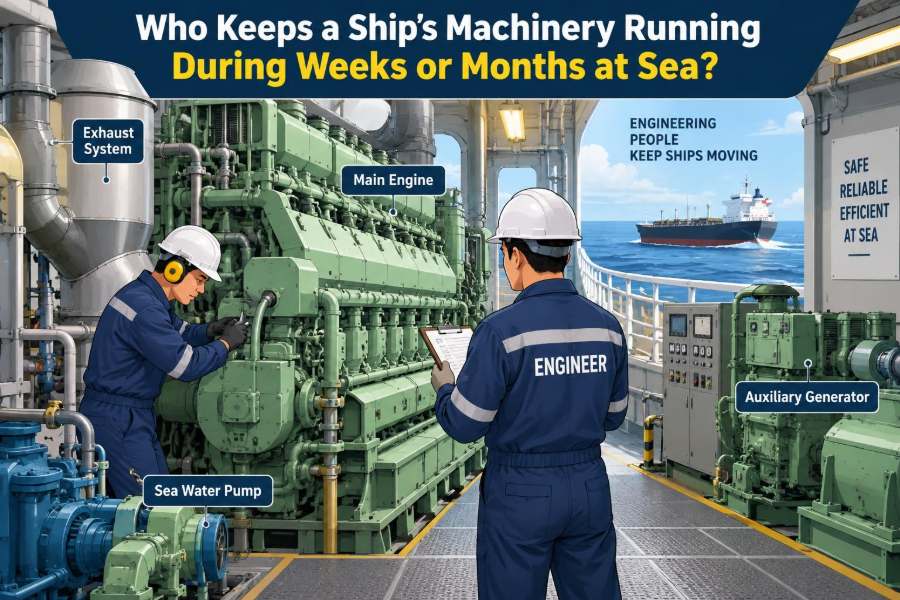
🚒 Who Keeps a Ship’s Machinery Running During Weeks or Months at Sea?
Posted inFeatured

🚒 Who Keeps a Ship’s Machinery Running During Weeks or Months at Sea?

Posted by admin November 19, 2026
Meet the engineering team behind propulsion, power, pumps, fuel, repairs, and safety during long voyages. See how small checks prevent major trouble at sea. πŸŒŠπŸ”§πŸ‘¨β€πŸ”§
Read More
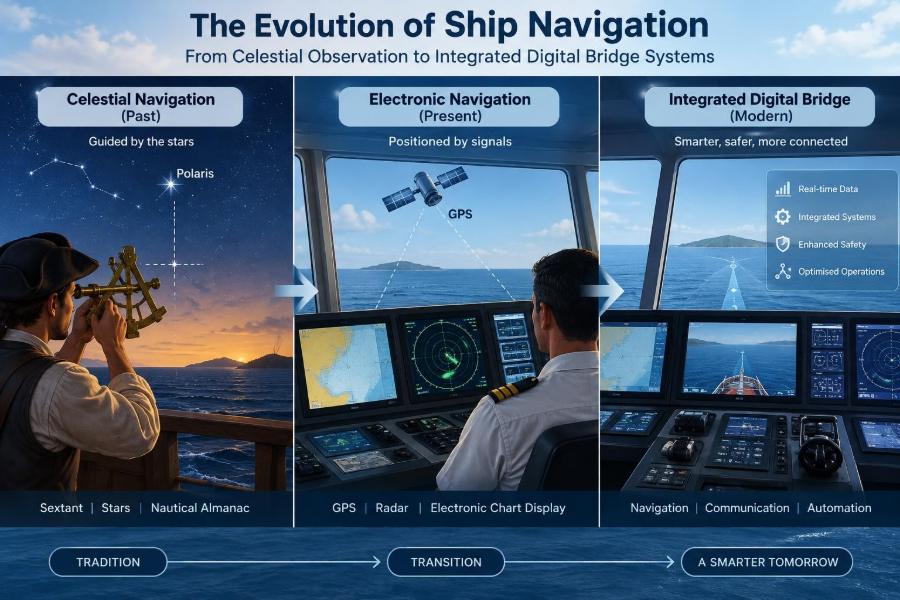
🚒 The Evolution of Ship Navigation: From Celestial Observation to Integrated Digital Bridge Systems
Posted inFeatured

🚒 The Evolution of Ship Navigation: From Celestial Observation to Integrated Digital Bridge Systems

Posted by admin November 19, 2026
From sextants and chronometers to radar, ECDIS, AIS, and sensor fusionβ€”see how navigation evolved, and why skilled human verification still matters at sea. 🌊 πŸ›°οΈ βš“
Read More
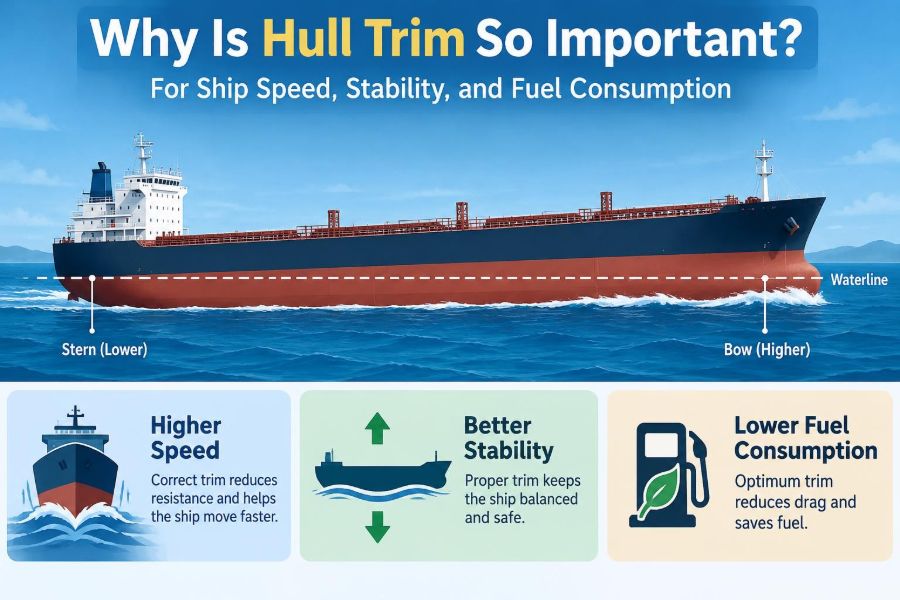
🚒 Why Is Hull Trim So Important for Ship Speed, Stability, and Fuel Consumption?
Posted inFeatured

🚒 Why Is Hull Trim So Important for Ship Speed, Stability, and Fuel Consumption?

Posted by admin November 16, 2026
A few centimeters of draft difference can affect resistance, propeller inflow, stability, and handling. Learn how crews balance safe trim with efficient ship performance βš“πŸŒŠβ›½
Read More
🚒 How Long Can a Cargo Ship Remain at Sea Before Maintenance, Fuel, and Crew Limits Take Over?
Posted inFeatured

🚒 How Long Can a Cargo Ship Remain at Sea Before Maintenance, Fuel, and Crew Limits Take Over?

Posted by admin November 15, 2026
Fuel is only one limit. Discover how machinery hours, fresh water, crew rest, cargo systems, spares, and dry-dock rules decide how long a ship can safely stay offshore. βš™οΈπŸŒŠπŸ§­
Read More
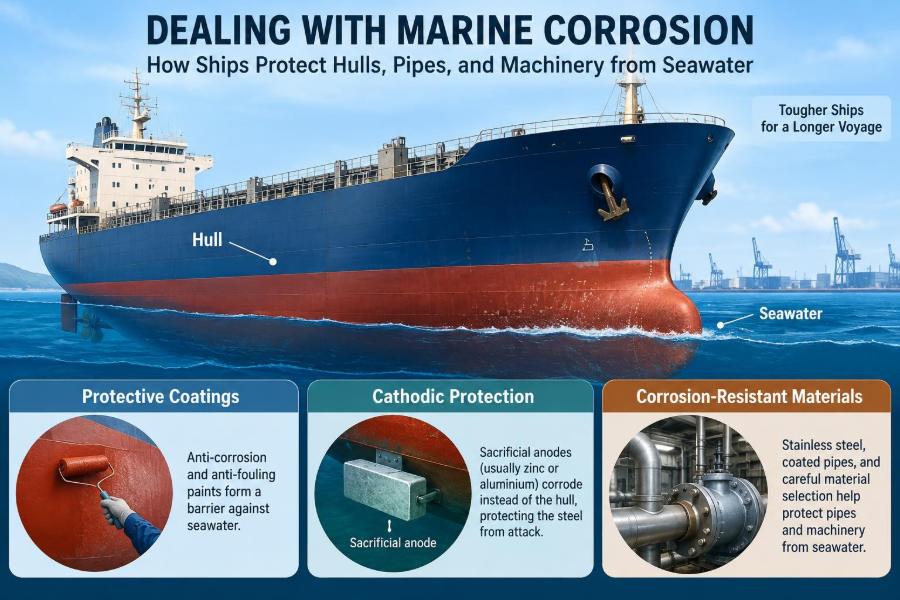
🚒 Dealing With Marine Corrosion: How Ships Protect Hulls, Pipes, and Machinery from Seawater
Posted inFeatured

🚒 Dealing With Marine Corrosion: How Ships Protect Hulls, Pipes, and Machinery from Seawater

Posted by admin November 15, 2026
From hidden pipe pits to hull coatings and sacrificial anodes, learn how ships interrupt corrosion before it becomes a leak, repair, or reliability problem. πŸ”§βš“πŸŒŠ
Read More
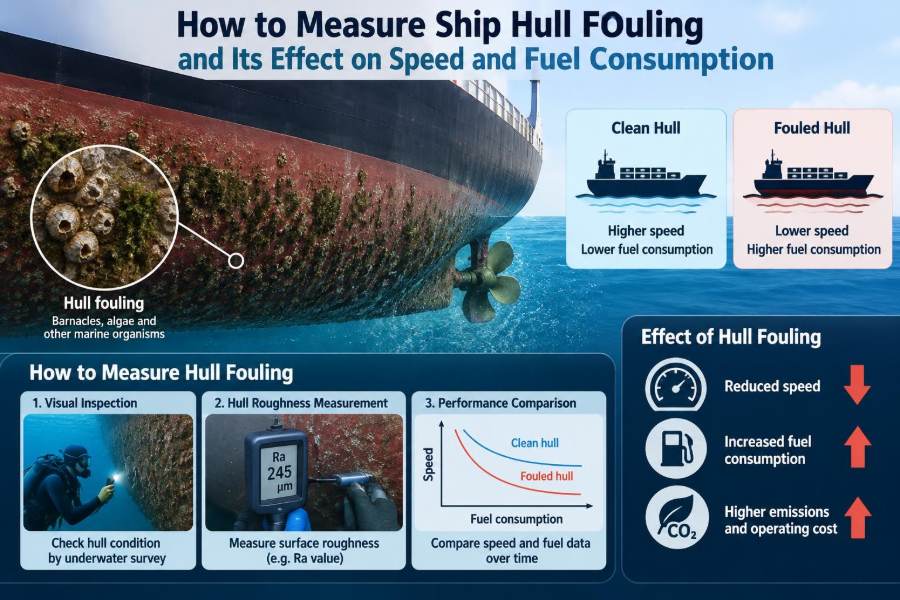
🚒 How to Measure Ship Hull Fouling and Its Effect on Speed and Fuel Consumption
Posted inFeatured

🚒 How to Measure Ship Hull Fouling and Its Effect on Speed and Fuel Consumption

Posted by admin November 14, 2026
Learn how to separate true hull-fouling losses from weather, currents, draft, and engine issuesβ€”then use data and inspections to decide when cleaning is worthwhile. πŸ“ŠπŸ”§πŸͺΈ
Read More
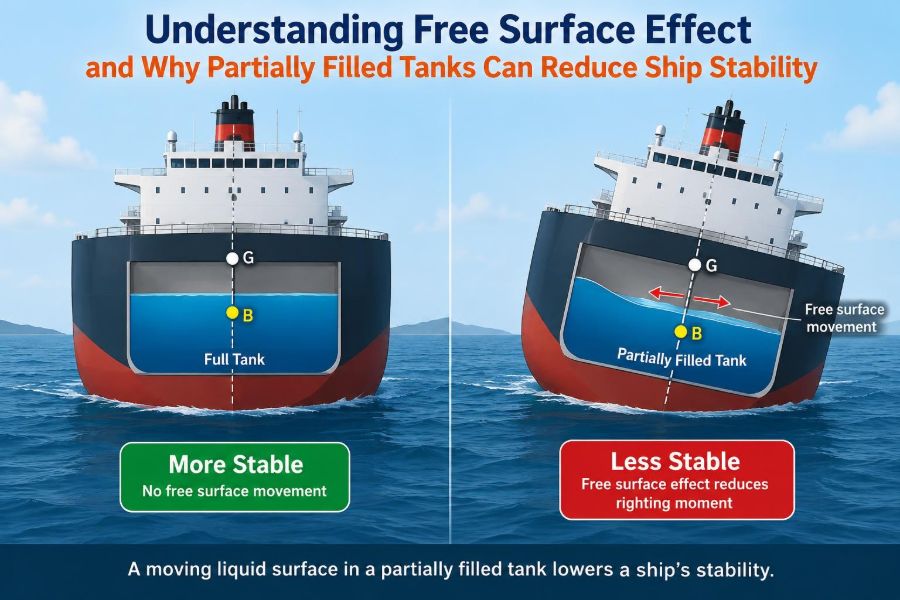
🚒 Understanding Free Surface Effect and Why Partially Filled Tanks Can Reduce Ship Stability
Posted inFeatured

🚒 Understanding Free Surface Effect and Why Partially Filled Tanks Can Reduce Ship Stability

Posted by admin November 12, 2026
A shifting liquid surface can quietly reduce a vessel’s righting ability. Learn the physics, calculation logic, and tank-management habits behind safe stability. βš“πŸŒŠπŸ“
Read More
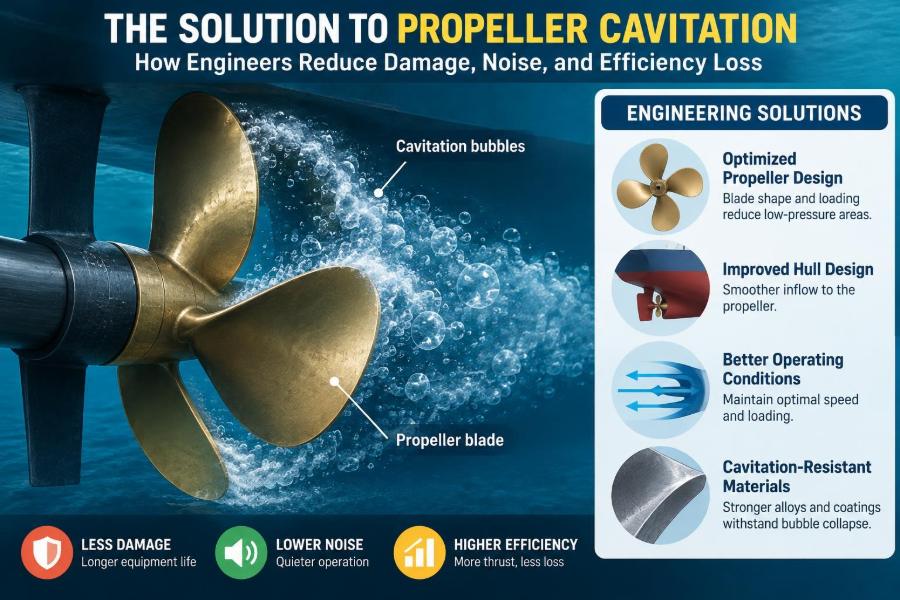
🚒 The Solution to Propeller Cavitation: How Engineers Reduce Damage, Noise, and Efficiency Loss
Posted inFeatured

🚒 The Solution to Propeller Cavitation: How Engineers Reduce Damage, Noise, and Efficiency Loss

Posted by admin November 12, 2026
Cavitation can pit blades, waste engine power, and shake a vessel’s stern. Learn how flow, RPM, blade design, and maintenance work together to control it. πŸŒŠπŸ”§βš™οΈ
Read More
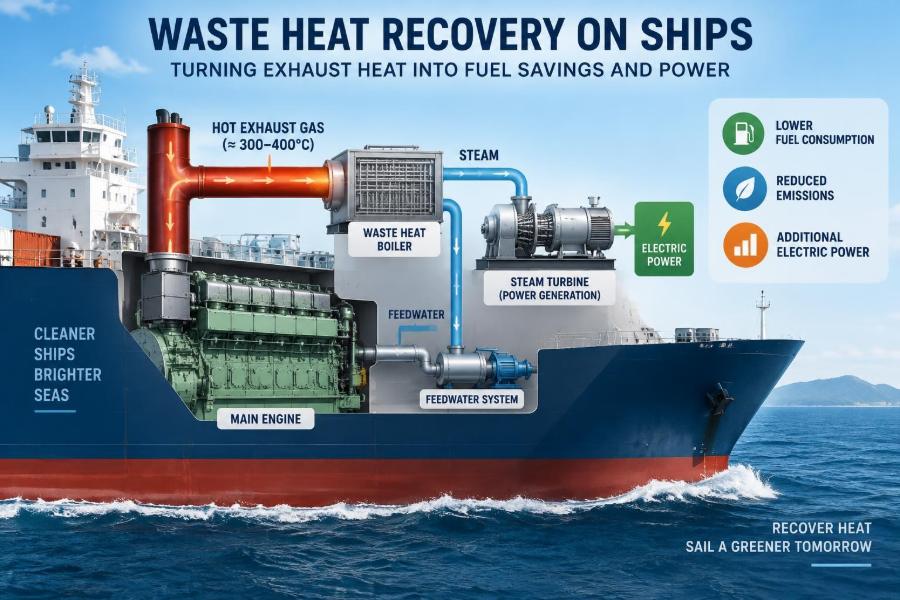
🚒 Real-World Uses of Waste Heat Recovery on Ships for Fuel Savings and Power Generation
Posted inFeatured

🚒 Real-World Uses of Waste Heat Recovery on Ships for Fuel Savings and Power Generation

Posted by admin November 11, 2026
Exhaust, cooling water, and steam can do far more than leave the engine room. See where shipboard heat recovery works, where it fails, and what engineers must monitor. πŸ”₯πŸ› οΈπŸŒ
Read More
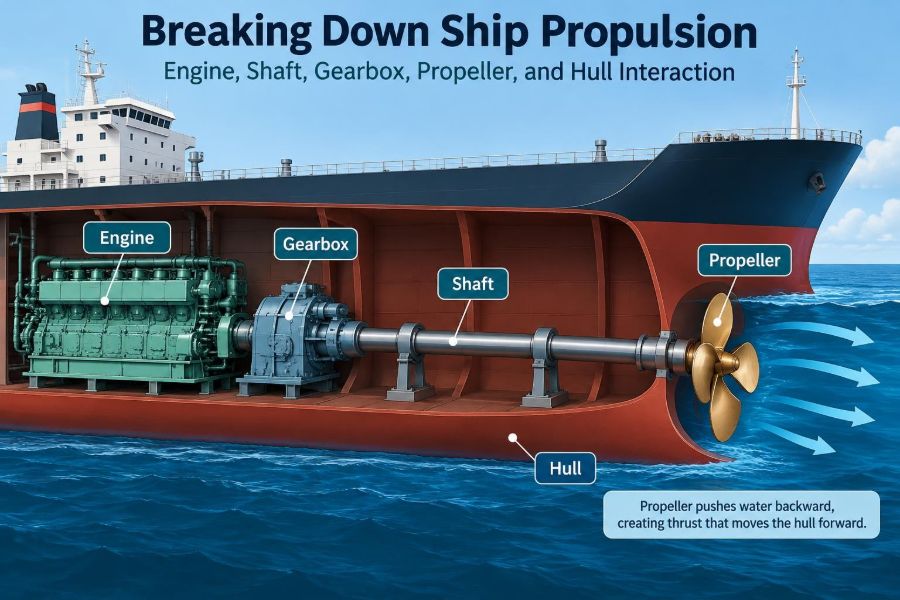
🚒 Breaking Down Ship Propulsion: Engine, Shaft, Gearbox, Propeller, and Hull Interaction
Posted inFeatured

🚒 Breaking Down Ship Propulsion: Engine, Shaft, Gearbox, Propeller, and Hull Interaction

Posted by admin November 11, 2026
Follow power from the main engine through the gearbox and shaft to the propellerβ€”and see how hull flow, fouling, cavitation, and weather shape ship performance. βš™οΈπŸŒŠπŸ”§
Read More

Posts pagination

1 2 3 … 107 Next page

Recent Posts

  • 🚒 Who Keeps a Ship’s Machinery Running During Weeks or Months at Sea?
  • 🚒 The Evolution of Ship Navigation: From Celestial Observation to Integrated Digital Bridge Systems
  • 🚒 Why Is Hull Trim So Important for Ship Speed, Stability, and Fuel Consumption?
  • 🚒 How Long Can a Cargo Ship Remain at Sea Before Maintenance, Fuel, and Crew Limits Take Over?
  • 🚒 Dealing With Marine Corrosion: How Ships Protect Hulls, Pipes, and Machinery from Seawater

Recent Comments

No comments to show.

Archives

  • November 2026
  • October 2026
  • September 2026
  • August 2026
  • July 2025
  • March 2025
  • February 2025
  • January 2025
  • October 2024
  • September 2024
  • January 2022
  • November 2021
  • October 2021
  • August 2021
  • July 2021
  • June 2021

Categories

  • Advanced
  • Basics
  • Bioremediation
  • Chemistry for Marine Engineering
  • Featured
  • General Concepts
  • Marine Auxiliary Machinery
  • Marine Control Engineering and Automation
  • Marine diesel engine
  • Marine electrical machines
  • Marine Electronics
  • Marine engine
  • Marine Engineering Materials
  • marine history
  • Marine hydraulic and fluid machinery
  • Marine Machinery and Systems Design
  • Marine machinery Drawing
  • Marine manufacturing technology
  • Marine Propulsion
  • Marine Refrigeration and Airconditioning
  • Marine steam engine
  • Marine Vehicles Performance
  • Mathematics for Marine Engineering
  • Mechanics of Marine Machines
  • navel arch
  • Ocean Exploration
  • Offshore Technology
  • safety precautions and watchkeeping
  • Seamanship Elementary Navigation and Survival at Sea
  • Ship Construction
  • ship design
  • Ship Operational Management and IMO Requirements
  • Ships Fire Prevention and Control
  • Stability of ships
  • Uncategorized
  • Underwater Engineering
Copyright 2026 — Marine Engineering. All rights reserved. Bloghash WordPress Theme
Scroll to Top