Skip to content
  • facebook.com
  • twitter.com
  • t.me
  • instagram.com
  • youtube.com
Marine Engineering

Engineering the Power Behind Every Voyage.

Subscribe
  • Home
  • Online Tools
  • Marine Engineering App
  • Home
  • 2026
  • November
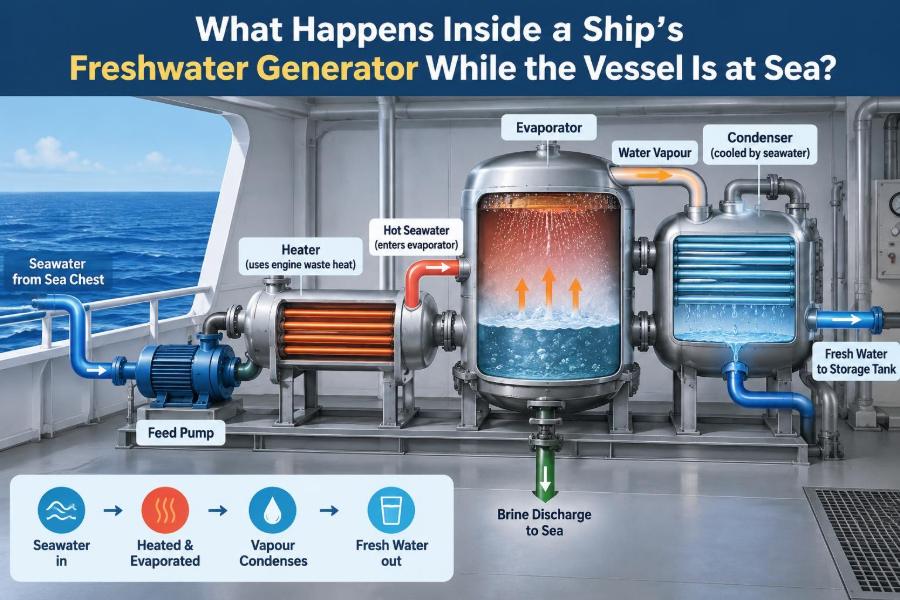
🚢 What Happens Inside a Ship’s Freshwater Generator While the Vessel Is at Sea?
Posted inFeatured

🚢 What Happens Inside a Ship’s Freshwater Generator While the Vessel Is at Sea?

Posted by admin November 24, 2026
A ship’s freshwater generator uses vacuum, engine heat, and seawater to create distillate. See what happens inside the plates, ejector, demister, and salinity line. ⚙️🌊🚢
Read More
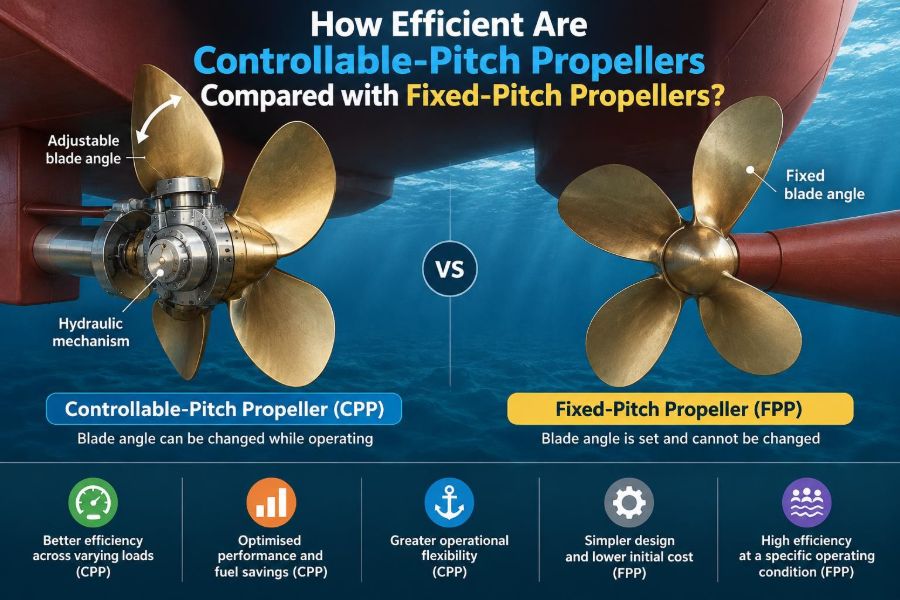
🚢 How Efficient Are Controllable-Pitch Propellers Compared with Fixed-Pitch Propellers?
Posted inFeatured

🚢 How Efficient Are Controllable-Pitch Propellers Compared with Fixed-Pitch Propellers?

Posted by admin November 23, 2026
Peak efficiency tells only part of the story. See how pitch control, engine loading, maneuvering, cavitation, and maintenance shape the right propeller choice. 🌊🔩📊
Read More
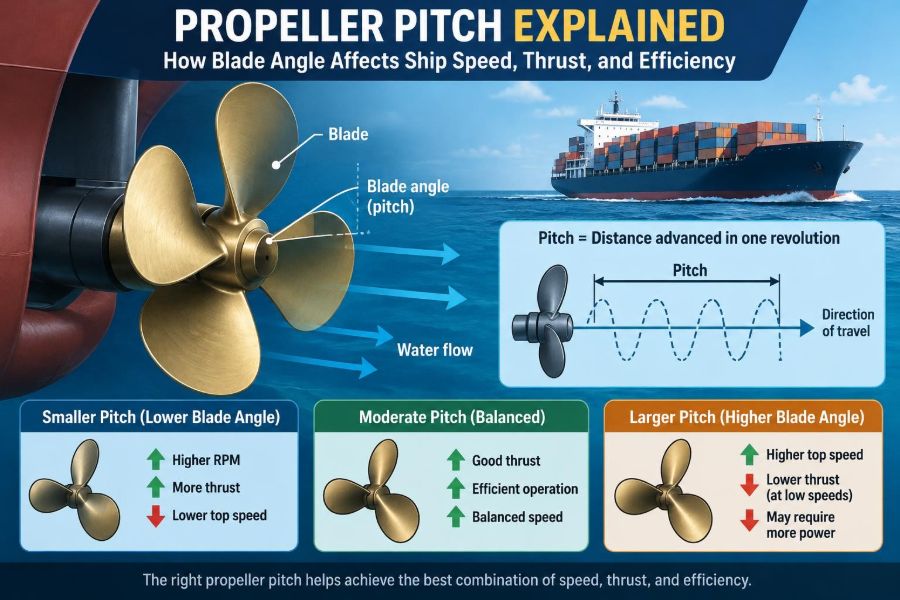
🚢 Propeller Pitch Explained: How Blade Angle Affects Ship Speed, Thrust, and Efficiency
Posted inFeatured

🚢 Propeller Pitch Explained: How Blade Angle Affects Ship Speed, Thrust, and Efficiency

Posted by admin November 23, 2026
A propeller’s pitch changes thrust, engine load, cavitation risk, and fuel use. Learn how blade angle really works—from fine pitch to CPP control. ⚙️🌊🚢
Read More
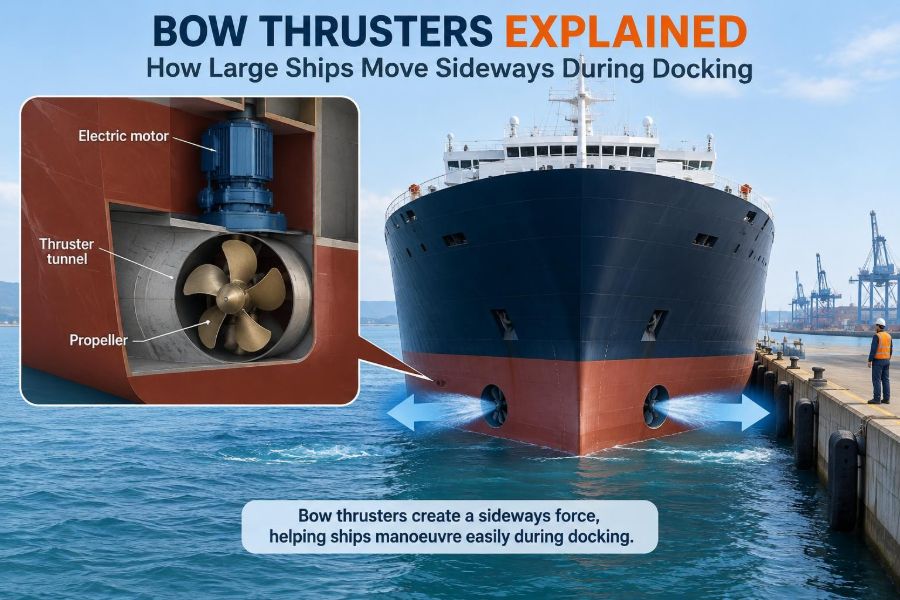
🚢 Bow Thrusters Explained: How Large Ships Move Sideways During Docking
Posted inFeatured

🚢 Bow Thrusters Explained: How Large Ships Move Sideways During Docking

Posted by admin November 22, 2026
Bow thrusters make precise docking possible—but wind, current, power limits, and hull motion still rule the manoeuvre. Learn what happens below the waterline ⚓🌊🔧
Read More
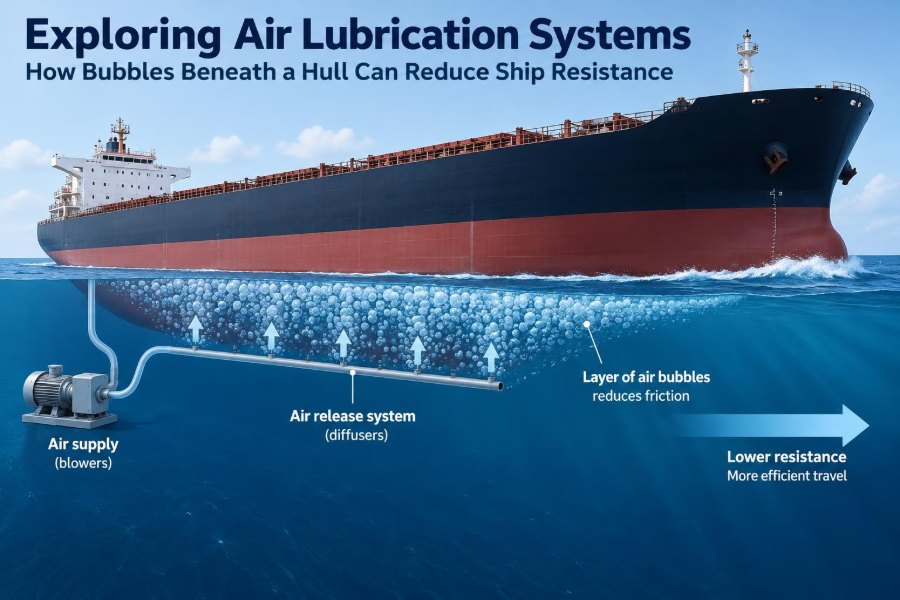
🚢 Exploring Air Lubrication Systems: How Bubbles Beneath a Hull Can Reduce Ship Resistance
Posted inFeatured

🚢 Exploring Air Lubrication Systems: How Bubbles Beneath a Hull Can Reduce Ship Resistance

Posted by admin November 20, 2026
A thin layer of air can change hull-water friction—but compressors, hull form, sea state, and maintenance decide the real result. Explore the engineering behind it. 🌊⚙️🫧
Read More
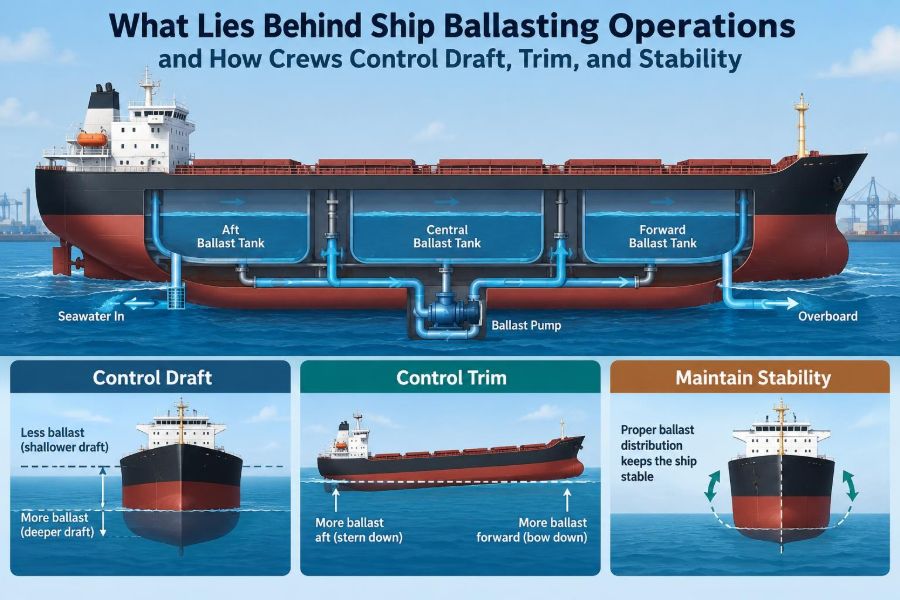
🚢 What Lies Behind Ship Ballasting Operations and How Crews Control Draft, Trim, and Stability
Posted inFeatured

🚢 What Lies Behind Ship Ballasting Operations and How Crews Control Draft, Trim, and Stability

Posted by admin November 20, 2026
Ballast water controls far more than a ship’s depth. See how crews manage draft, trim, stability, hull stress, pumps, and environmental rules during every transfer. 🚢🌊🧭
Read More
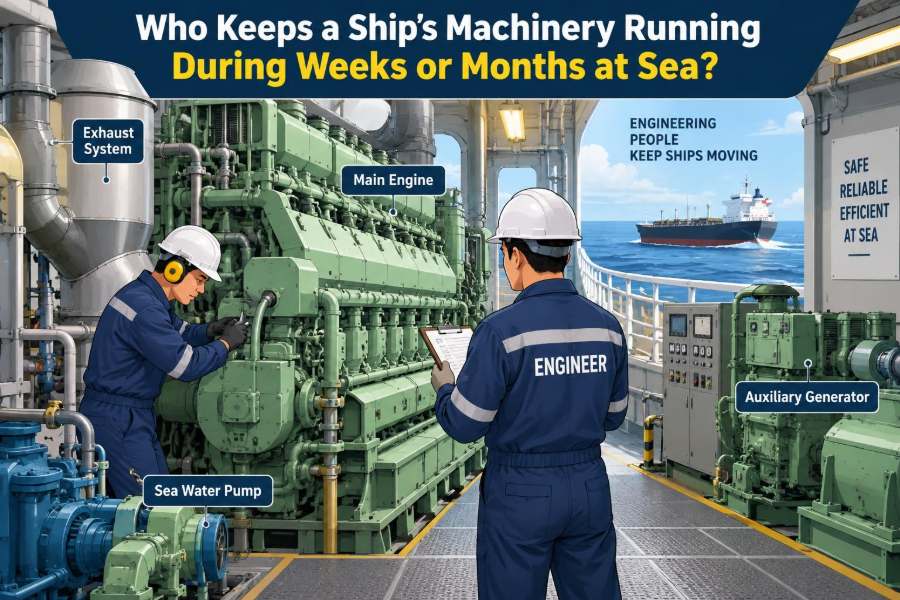
🚢 Who Keeps a Ship’s Machinery Running During Weeks or Months at Sea?
Posted inFeatured

🚢 Who Keeps a Ship’s Machinery Running During Weeks or Months at Sea?

Posted by admin November 19, 2026
Meet the engineering team behind propulsion, power, pumps, fuel, repairs, and safety during long voyages. See how small checks prevent major trouble at sea. 🌊🔧👨‍🔧
Read More
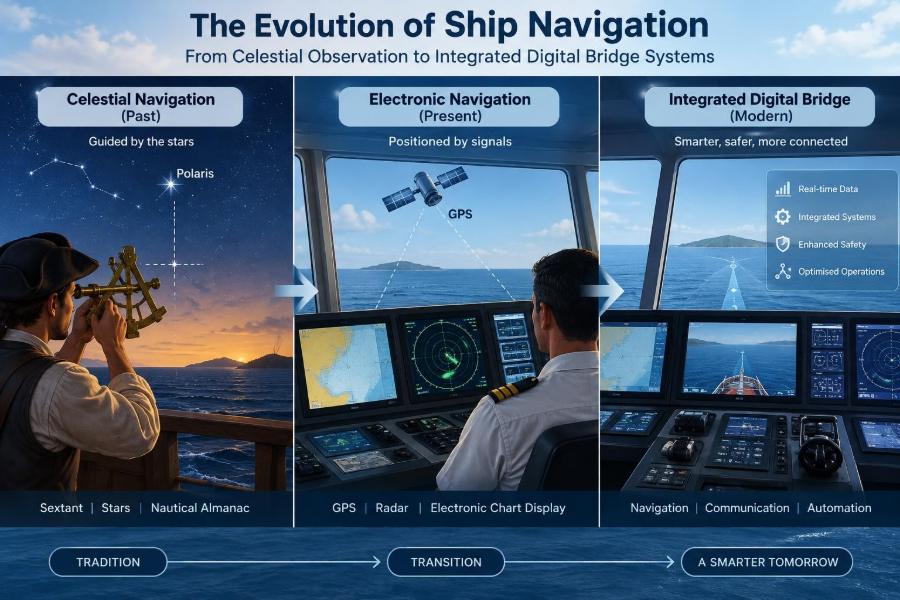
🚢 The Evolution of Ship Navigation: From Celestial Observation to Integrated Digital Bridge Systems
Posted inFeatured

🚢 The Evolution of Ship Navigation: From Celestial Observation to Integrated Digital Bridge Systems

Posted by admin November 19, 2026
From sextants and chronometers to radar, ECDIS, AIS, and sensor fusion—see how navigation evolved, and why skilled human verification still matters at sea. 🌊 🛰️ ⚓
Read More
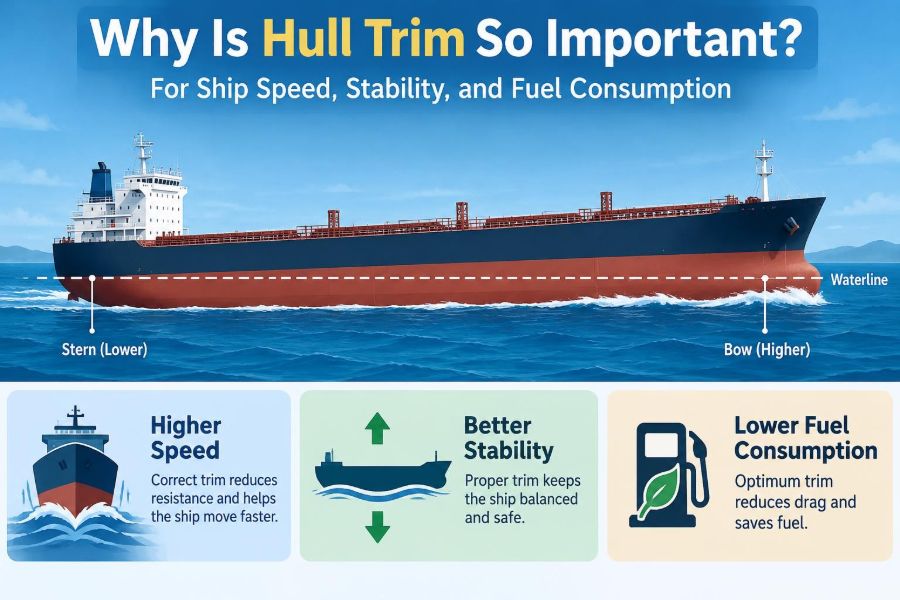
🚢 Why Is Hull Trim So Important for Ship Speed, Stability, and Fuel Consumption?
Posted inFeatured

🚢 Why Is Hull Trim So Important for Ship Speed, Stability, and Fuel Consumption?

Posted by admin November 16, 2026
A few centimeters of draft difference can affect resistance, propeller inflow, stability, and handling. Learn how crews balance safe trim with efficient ship performance ⚓🌊⛽
Read More
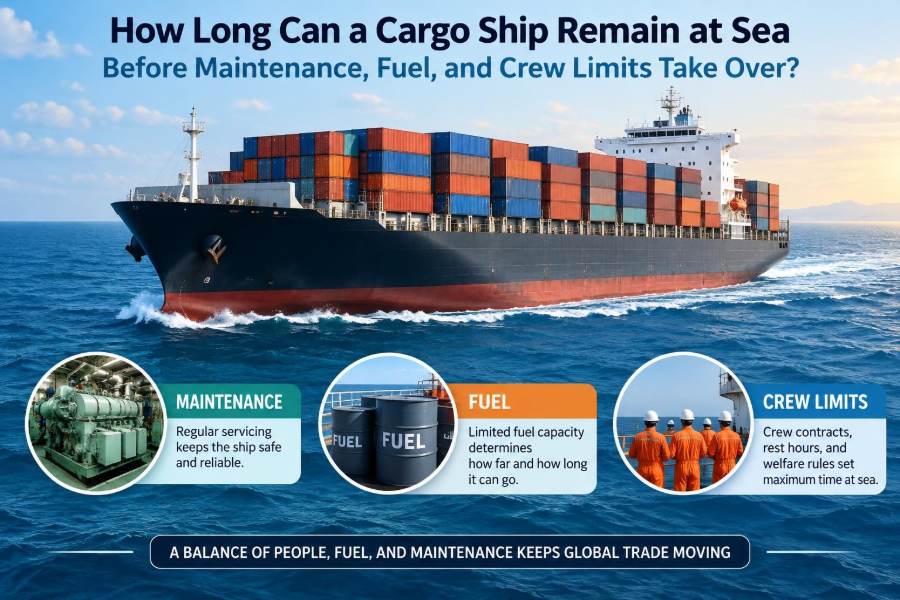
🚢 How Long Can a Cargo Ship Remain at Sea Before Maintenance, Fuel, and Crew Limits Take Over?
Posted inFeatured

🚢 How Long Can a Cargo Ship Remain at Sea Before Maintenance, Fuel, and Crew Limits Take Over?

Posted by admin November 15, 2026
Fuel is only one limit. Discover how machinery hours, fresh water, crew rest, cargo systems, spares, and dry-dock rules decide how long a ship can safely stay offshore. ⚙️🌊🧭
Read More

Posts pagination

1 2 3 Next page

Recent Posts

  • 🚢 What Happens Inside a Ship’s Freshwater Generator While the Vessel Is at Sea?
  • 🚢 How Efficient Are Controllable-Pitch Propellers Compared with Fixed-Pitch Propellers?
  • 🚢 Propeller Pitch Explained: How Blade Angle Affects Ship Speed, Thrust, and Efficiency
  • 🚢 Bow Thrusters Explained: How Large Ships Move Sideways During Docking
  • 🚢 Exploring Air Lubrication Systems: How Bubbles Beneath a Hull Can Reduce Ship Resistance

Recent Comments

No comments to show.

Archives

  • November 2026
  • October 2026
  • September 2026
  • August 2026
  • July 2025
  • March 2025
  • February 2025
  • January 2025
  • October 2024
  • September 2024
  • January 2022
  • November 2021
  • October 2021
  • August 2021
  • July 2021
  • June 2021

Categories

  • Advanced
  • Basics
  • Bioremediation
  • Chemistry for Marine Engineering
  • Featured
  • General Concepts
  • Marine Auxiliary Machinery
  • Marine Control Engineering and Automation
  • Marine diesel engine
  • Marine electrical machines
  • Marine Electronics
  • Marine engine
  • Marine Engineering Materials
  • marine history
  • Marine hydraulic and fluid machinery
  • Marine Machinery and Systems Design
  • Marine machinery Drawing
  • Marine manufacturing technology
  • Marine Propulsion
  • Marine Refrigeration and Airconditioning
  • Marine steam engine
  • Marine Vehicles Performance
  • Mathematics for Marine Engineering
  • Mechanics of Marine Machines
  • navel arch
  • Ocean Exploration
  • Offshore Technology
  • safety precautions and watchkeeping
  • Seamanship Elementary Navigation and Survival at Sea
  • Ship Construction
  • ship design
  • Ship Operational Management and IMO Requirements
  • Ships Fire Prevention and Control
  • Stability of ships
  • Uncategorized
  • Underwater Engineering
Copyright 2026 — Marine Engineering. All rights reserved. Bloghash WordPress Theme
Scroll to Top