Skip to content
  • facebook.com
  • twitter.com
  • t.me
  • instagram.com
  • youtube.com
Marine Engineering

Engineering the Power Behind Every Voyage.

Subscribe
  • Home
  • Online Tools
  • Marine Engineering App
  • Home
  • Featured
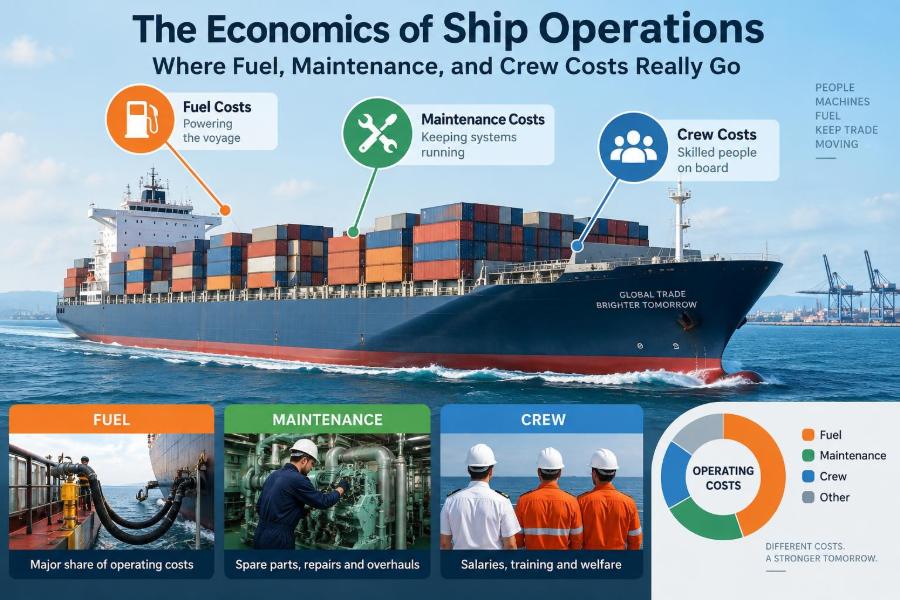
🚒 The Economics of Ship Operations: Where Fuel, Maintenance, and Crew Costs Really Go
Posted inFeatured

🚒 The Economics of Ship Operations: Where Fuel, Maintenance, and Crew Costs Really Go

Posted by admin October 10, 2026
Fuel is only part of the equation. See how maintenance, crew decisions, port time, reliability, and data shape a vessel’s real operating costβ€”and where false savings hide. βš™οΈβ›½πŸŒŠ
Read More
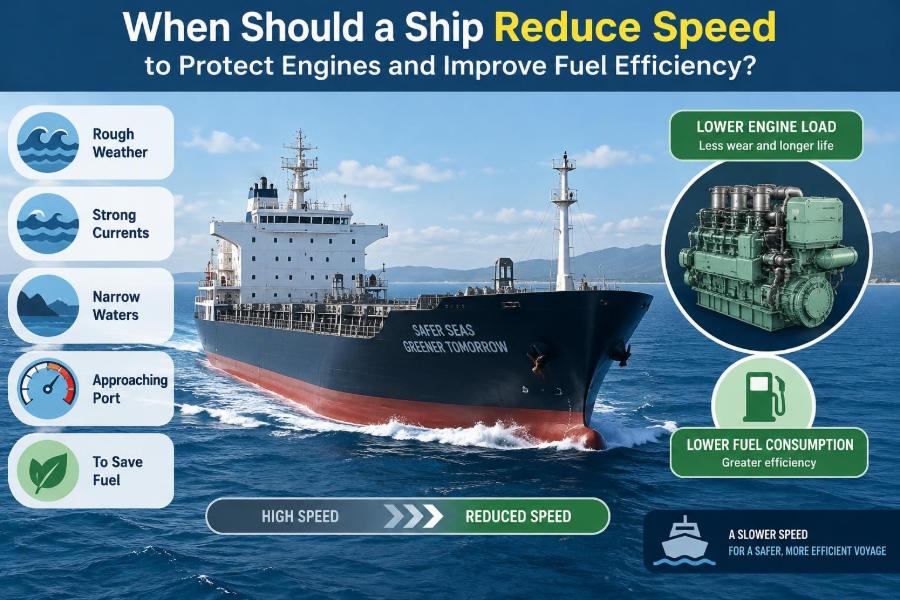
🚒 When Should a Ship Reduce Speed to Protect Engines and Improve Fuel Efficiency?
Posted inFeatured

🚒 When Should a Ship Reduce Speed to Protect Engines and Improve Fuel Efficiency?

Posted by admin October 9, 2026
Heavy seas, fouled hulls, hot exhausts, and tight ETAs can all change the right speed. Learn when slowing down protects machinery and saves fuel. βš™οΈπŸŒŠπŸ“Š
Read More
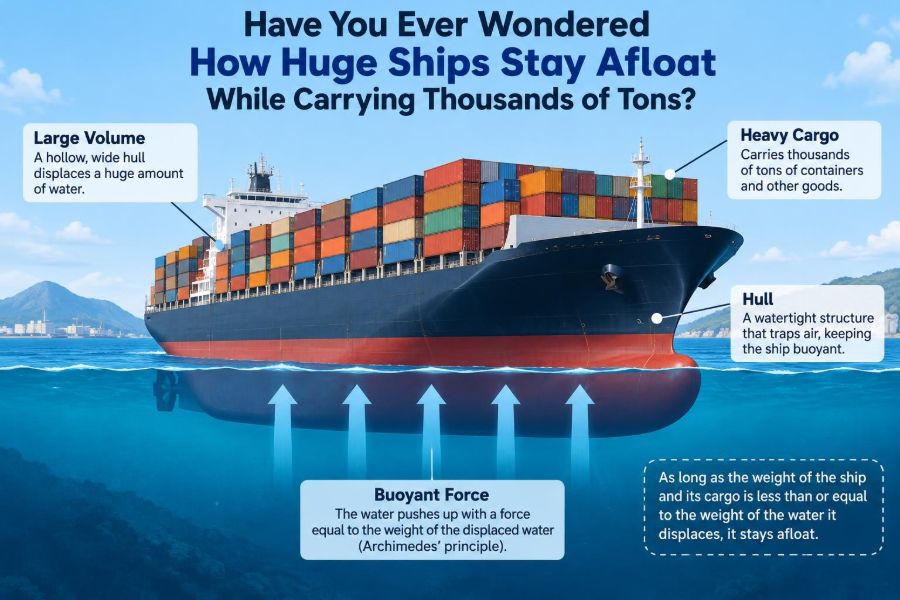
🚒 Have You Ever Wondered How Huge Ships Stay Afloat While Carrying Thousands of Tons?
Posted inFeatured

🚒 Have You Ever Wondered How Huge Ships Stay Afloat While Carrying Thousands of Tons?

Posted by admin October 9, 2026
A huge ship floats by more than simple buoyancy. Explore displacement, stability, ballast, cargo loading, and the safety margins that keep vessels upright. βš“πŸŒŠπŸ“¦
Read More
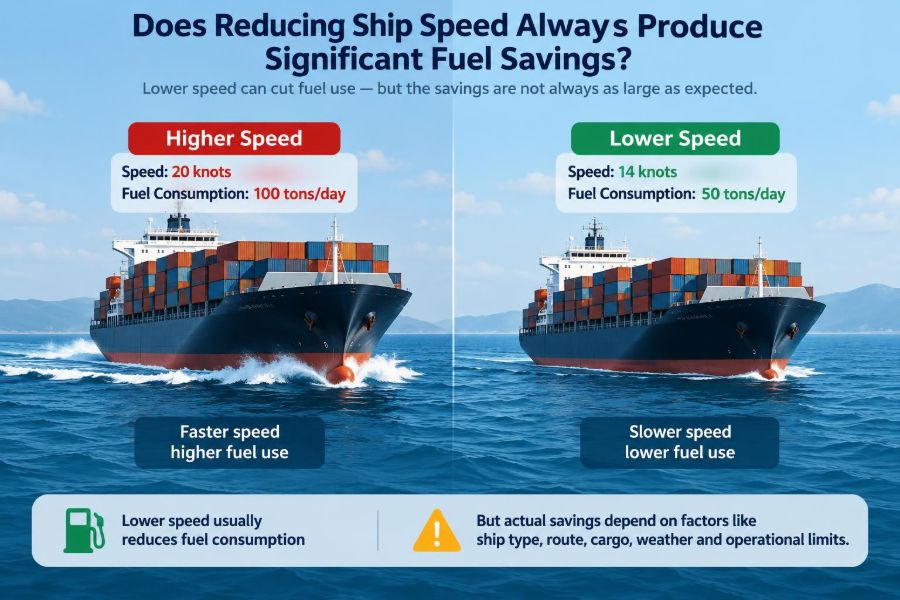
🚒 Does Reducing Ship Speed Always Produce Significant Fuel Savings?
Posted inFeatured

🚒 Does Reducing Ship Speed Always Produce Significant Fuel Savings?

Posted by admin October 8, 2026
Lower speed can cut engine power sharplyβ€”but longer voyages, hotel load, weather, and engine limits can change the answer. Learn what truly drives ship fuel savings. βš“πŸ“‰πŸŒŠ
Read More
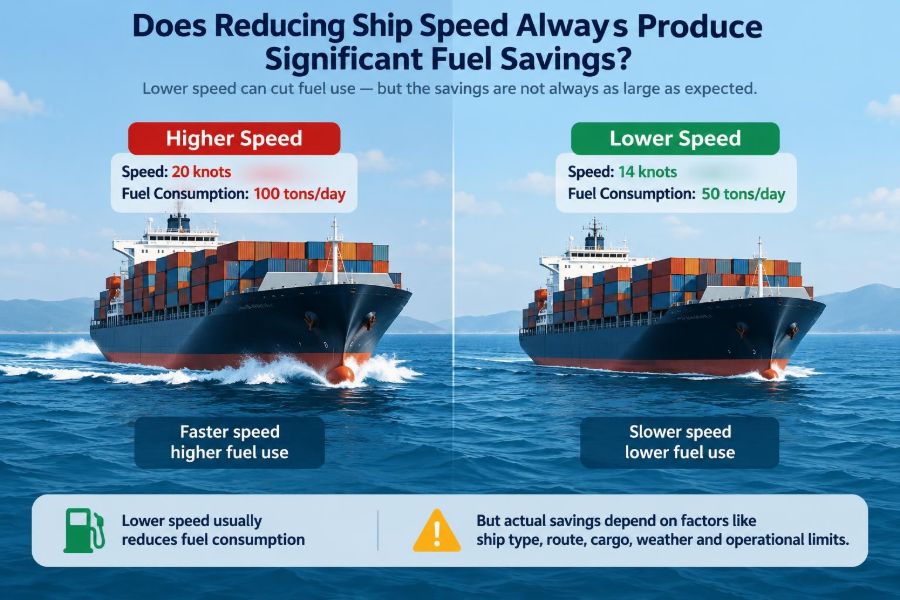
🚒 Does Reducing Ship Speed Always Produce Significant Fuel Savings?
Posted inFeatured

🚒 Does Reducing Ship Speed Always Produce Significant Fuel Savings?

Posted by admin October 8, 2026
Lower speed can cut engine power sharplyβ€”but longer voyages, hotel load, weather, and engine limits can change the answer. Learn what truly drives ship fuel savings. βš“πŸ“‰πŸŒŠ
Read More
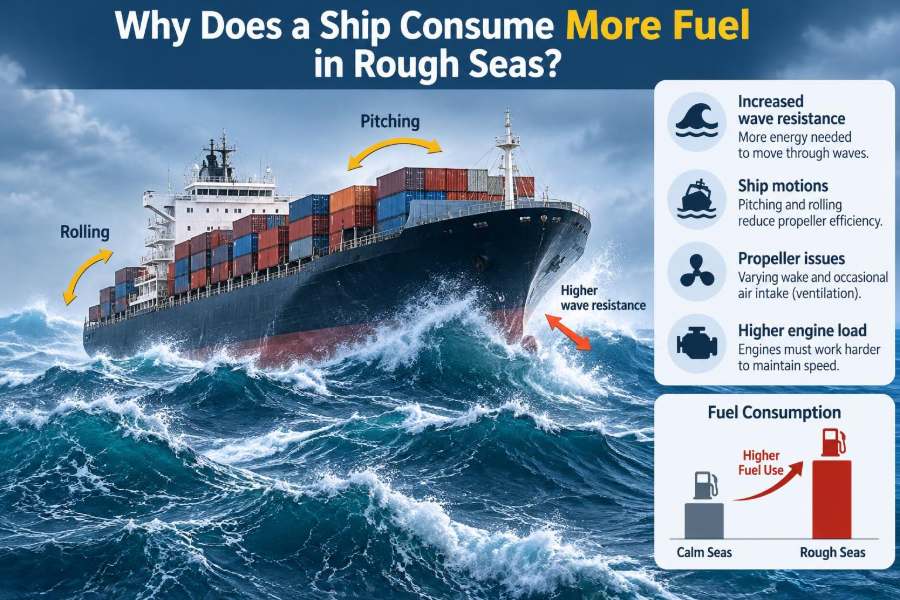
🚒 Why Does a Ship Consume More Fuel in Rough Seas?
Posted inFeatured

🚒 Why Does a Ship Consume More Fuel in Rough Seas?

Posted by admin October 8, 2026
Waves do more than slow a ship down. See how hull motion, propeller losses, wind, steering and engine loading combine to raise fuel use at sea. πŸŒŠβš™οΈπŸ§­
Read More
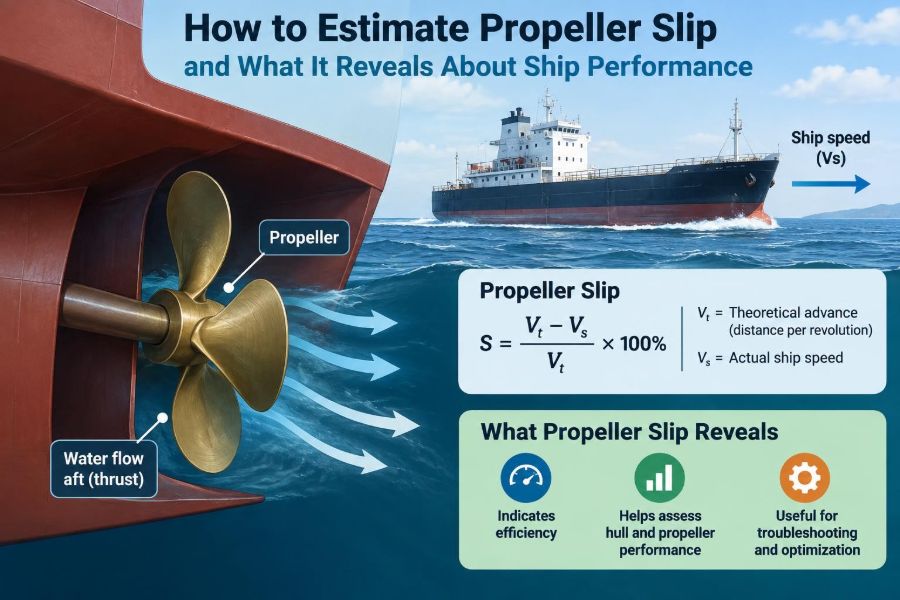
🚒 How to Estimate Propeller Slip and What It Reveals About Ship Performance
Posted inFeatured

🚒 How to Estimate Propeller Slip and What It Reveals About Ship Performance

Posted by admin October 7, 2026
Learn the simple slip calculation, why GPS speed can mislead it, and how trends can reveal fouling, damage, or changing resistance at sea. βš“πŸ“ŠπŸŒŠ
Read More
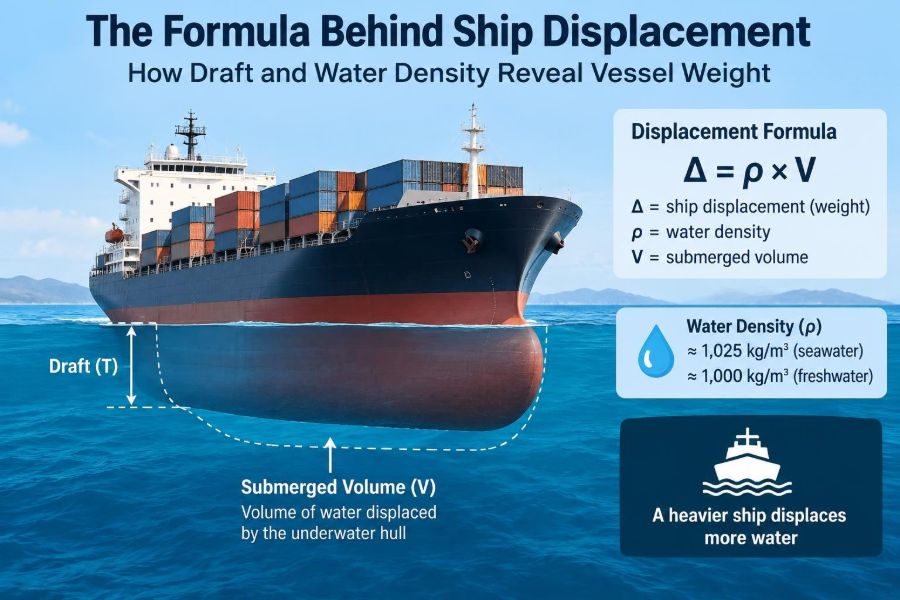
🚒 The Formula Behind Ship Displacement: How Draft and Water Density Reveal Vessel Weight
Posted inFeatured

🚒 The Formula Behind Ship Displacement: How Draft and Water Density Reveal Vessel Weight

Posted by admin October 6, 2026
A floating vessel is a giant weighing instrument. Learn how draft readings, hydrostatic tables, and water density turn buoyancy into a practical displacement calculation. βš“πŸŒŠπŸ“
Read More
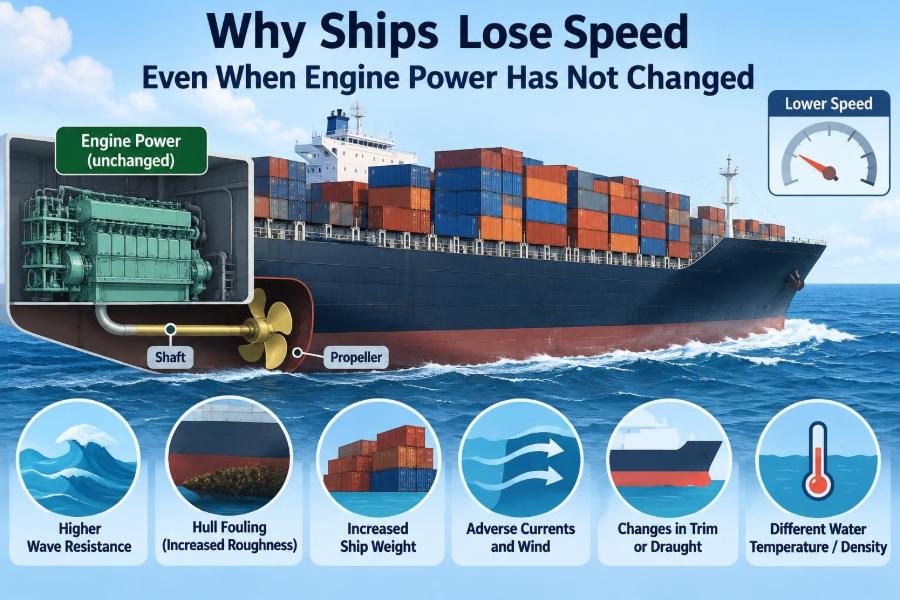
🚒 Why Ships Lose Speed Even When Engine Power Has Not Changed
Posted inFeatured

🚒 Why Ships Lose Speed Even When Engine Power Has Not Changed

Posted by admin October 5, 2026
Same rpm, same engine loadβ€”yet less speed? Discover how currents, waves, hull fouling, propeller condition, trim, and data errors reshape ship performance. πŸŒŠβš™οΈπŸ“Š
Read More
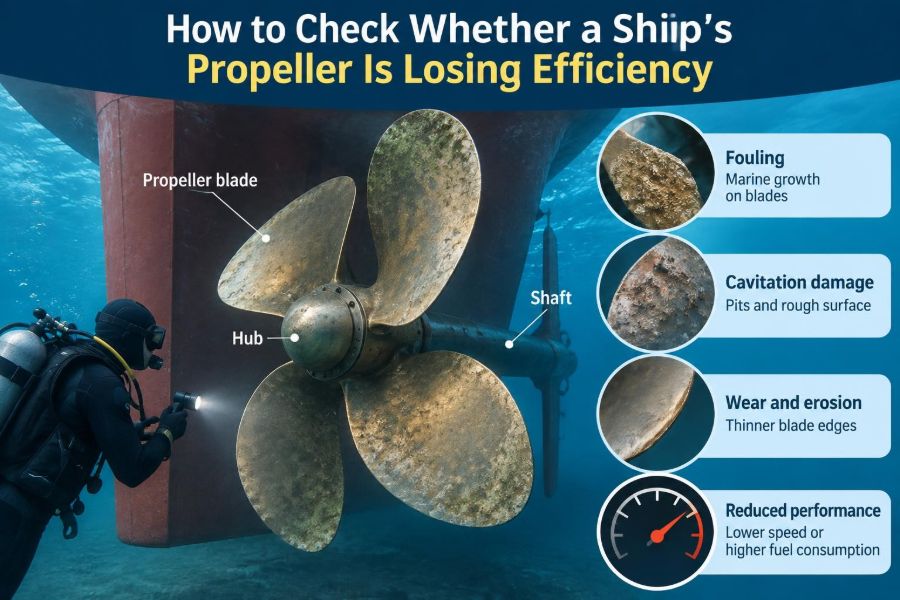
🚒 How to Check Whether a Ship’s Propeller Is Losing Efficiency
Posted inFeatured

🚒 How to Check Whether a Ship’s Propeller Is Losing Efficiency

Posted by admin October 5, 2026
Learn how to spot speed–power drift, separate hull fouling from propeller faults, and plan a sound inspection before small losses become costly problems. βš™οΈπŸŒŠπŸ“Š
Read More

Posts pagination

1 2 3 … 8 Next page

Recent Posts

  • 🚒 The Economics of Ship Operations: Where Fuel, Maintenance, and Crew Costs Really Go
  • 🚒 When Should a Ship Reduce Speed to Protect Engines and Improve Fuel Efficiency?
  • 🚒 Have You Ever Wondered How Huge Ships Stay Afloat While Carrying Thousands of Tons?
  • 🚒 Does Reducing Ship Speed Always Produce Significant Fuel Savings?
  • 🚒 Does Reducing Ship Speed Always Produce Significant Fuel Savings?

Recent Comments

No comments to show.

Archives

  • October 2026
  • September 2026
  • August 2026
  • July 2025
  • March 2025
  • February 2025
  • January 2025
  • October 2024
  • September 2024
  • January 2022
  • November 2021
  • October 2021
  • August 2021
  • July 2021
  • June 2021

Categories

  • Advanced
  • Basics
  • Bioremediation
  • Chemistry for Marine Engineering
  • Featured
  • General Concepts
  • Marine Auxiliary Machinery
  • Marine Control Engineering and Automation
  • Marine diesel engine
  • Marine electrical machines
  • Marine Electronics
  • Marine engine
  • Marine Engineering Materials
  • marine history
  • Marine hydraulic and fluid machinery
  • Marine Machinery and Systems Design
  • Marine machinery Drawing
  • Marine manufacturing technology
  • Marine Propulsion
  • Marine Refrigeration and Airconditioning
  • Marine steam engine
  • Marine Vehicles Performance
  • Mathematics for Marine Engineering
  • Mechanics of Marine Machines
  • navel arch
  • Ocean Exploration
  • Offshore Technology
  • safety precautions and watchkeeping
  • Seamanship Elementary Navigation and Survival at Sea
  • Ship Construction
  • ship design
  • Ship Operational Management and IMO Requirements
  • Ships Fire Prevention and Control
  • Stability of ships
  • Uncategorized
  • Underwater Engineering
Copyright 2026 — Marine Engineering. All rights reserved. Bloghash WordPress Theme
Scroll to Top