Skip to content
  • facebook.com
  • twitter.com
  • t.me
  • instagram.com
  • youtube.com
Marine Engineering

Engineering the Power Behind Every Voyage.

Subscribe
  • Home
  • Online Tools
  • Marine Engineering App
  • Home
  • Ship Propulsion
  • Page 2
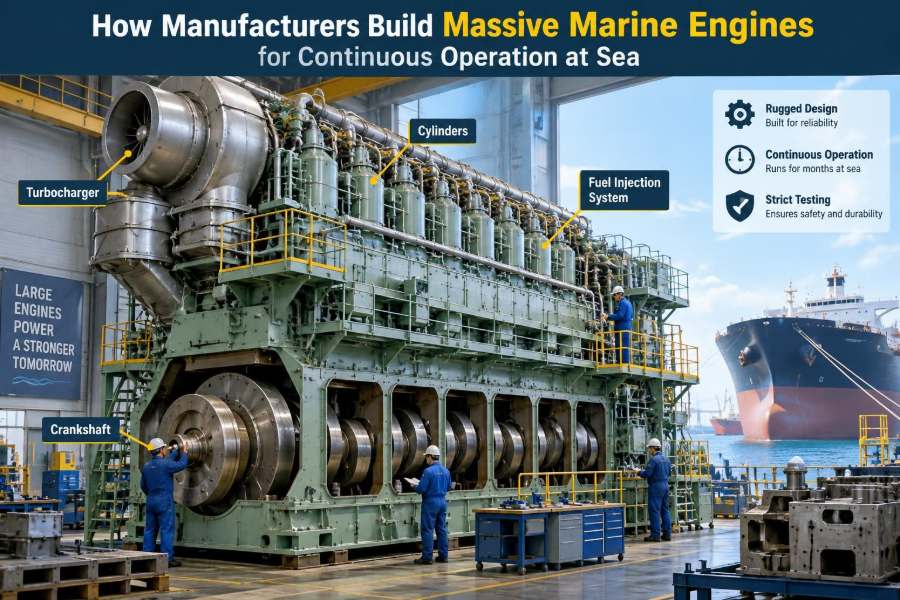
🚒 How Manufacturers Build Massive Marine Engines for Continuous Operation at Sea
Posted inFeatured

🚒 How Manufacturers Build Massive Marine Engines for Continuous Operation at Sea

Posted by admin October 18, 2026
From forged crankshafts to factory acceptance tests, see how manufacturers build marine engines to handle heat, load, vibration, and life far from shore. βš™οΈπŸŒŠπŸ”
Read More
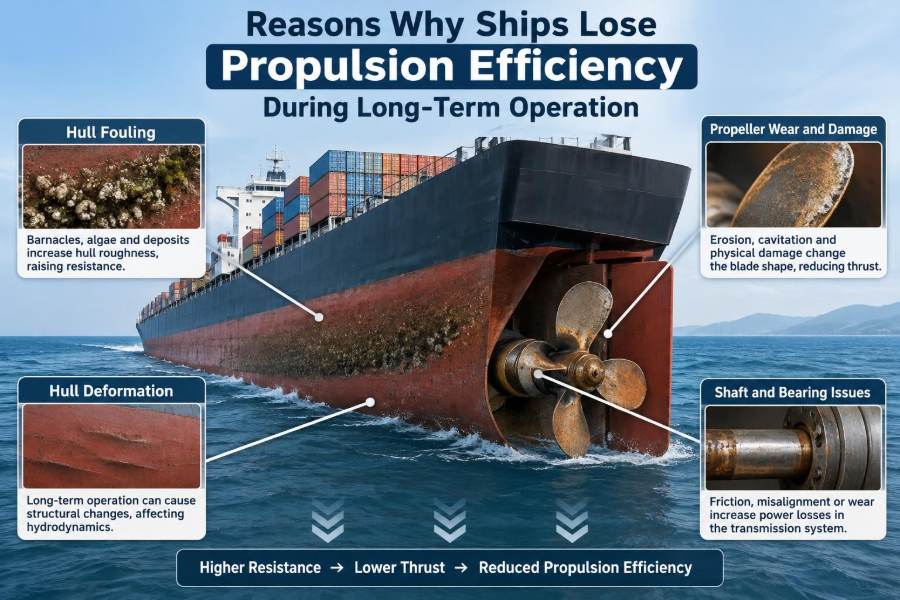
🚒 Reasons Why Ships Lose Propulsion Efficiency During Long-Term Operation
Posted inFeatured

🚒 Reasons Why Ships Lose Propulsion Efficiency During Long-Term Operation

Posted by admin October 17, 2026
Hull slime, propeller damage, engine fouling, and poor data comparisons can all quietly reduce ship performance. Learn where the energy goes and what to check first. πŸŒŠπŸ”§πŸ“Š
Read More
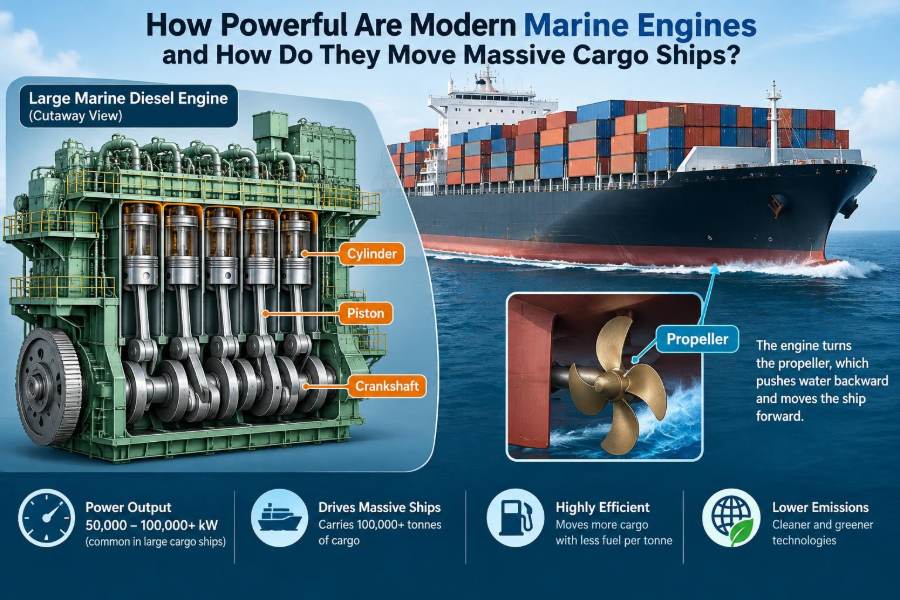
🚒 How Powerful Are Modern Marine Engines and How Do They Move Massive Cargo Ships?
Posted inFeatured

🚒 How Powerful Are Modern Marine Engines and How Do They Move Massive Cargo Ships?

Posted by admin October 16, 2026
From huge low-speed diesels to propellers, torque, cavitation, and fuel-saving tactics, see how marine engineers turn engine power into ocean-crossing thrust. βš™οΈπŸŒŠπŸš’
Read More
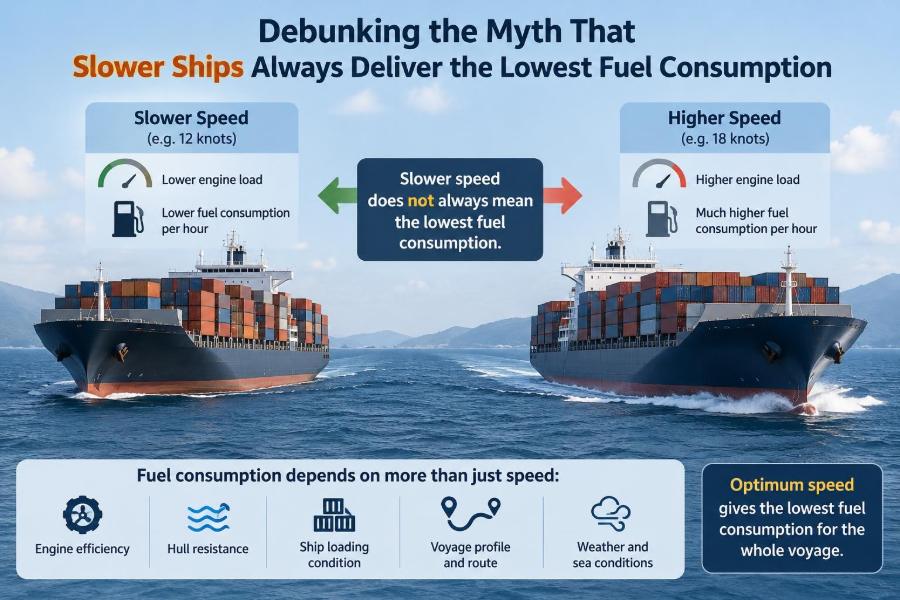
🚒 Debunking the Myth That Slower Ships Always Deliver the Lowest Fuel Consumption
Posted inFeatured

🚒 Debunking the Myth That Slower Ships Always Deliver the Lowest Fuel Consumption

Posted by admin October 15, 2026
Slow steaming can cut propulsion powerβ€”but longer voyages, engine load, auxiliaries, weather, and port windows can reverse the result. Learn what truly optimizes voyage fuel. πŸŒŠπŸ›’οΈπŸ“Š
Read More
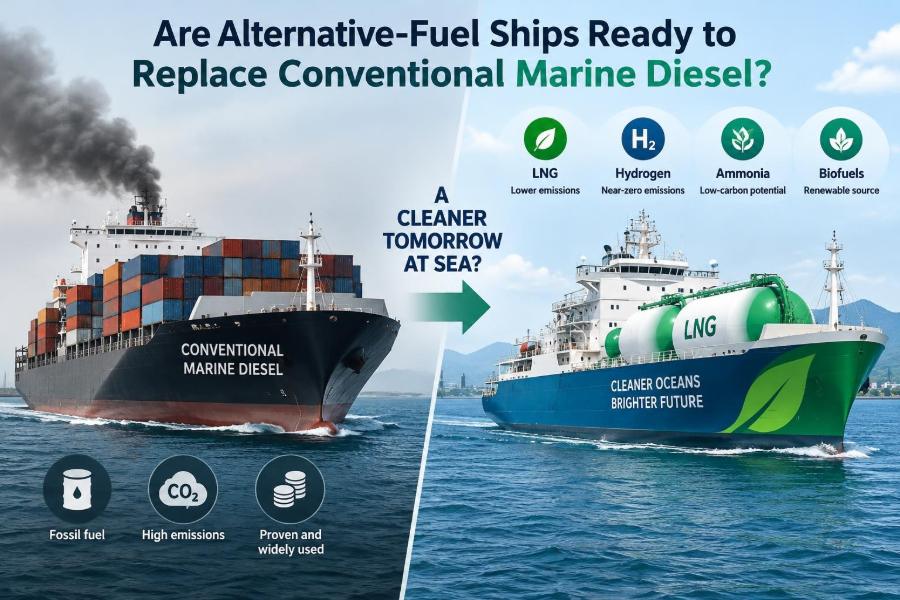
🚒 Are Alternative-Fuel Ships Ready to Replace Conventional Marine Diesel?
Posted inFeatured

🚒 Are Alternative-Fuel Ships Ready to Replace Conventional Marine Diesel?

Posted by admin October 11, 2026
Batteries, methanol, ammonia, LNG, and hydrogen all solve different problems. ⚑ Learn which fuels fit which shipsβ€”and why safety, range, and ports decide the outcome. πŸŒπŸ› οΈ
Read More
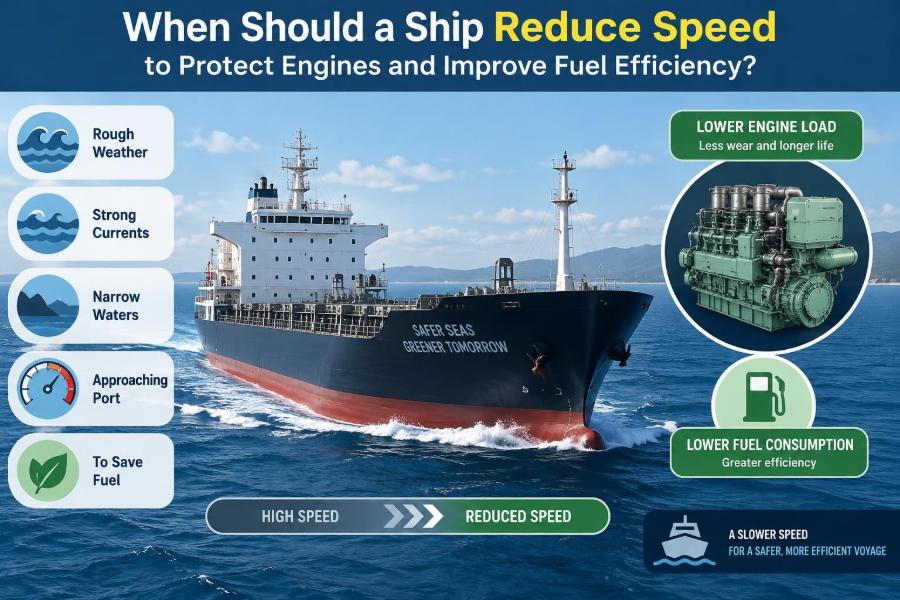
🚒 When Should a Ship Reduce Speed to Protect Engines and Improve Fuel Efficiency?
Posted inFeatured

🚒 When Should a Ship Reduce Speed to Protect Engines and Improve Fuel Efficiency?

Posted by admin October 9, 2026
Heavy seas, fouled hulls, hot exhausts, and tight ETAs can all change the right speed. Learn when slowing down protects machinery and saves fuel. βš™οΈπŸŒŠπŸ“Š
Read More
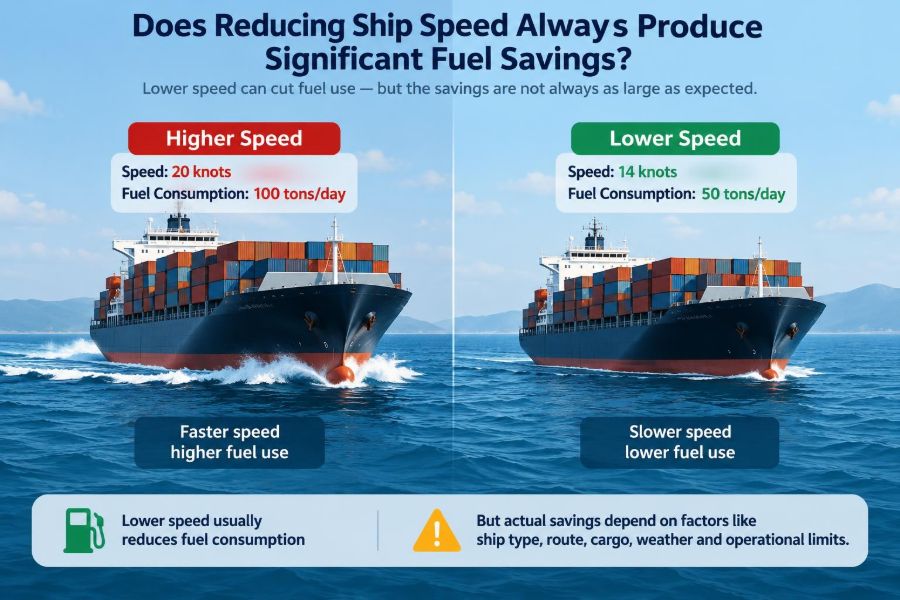
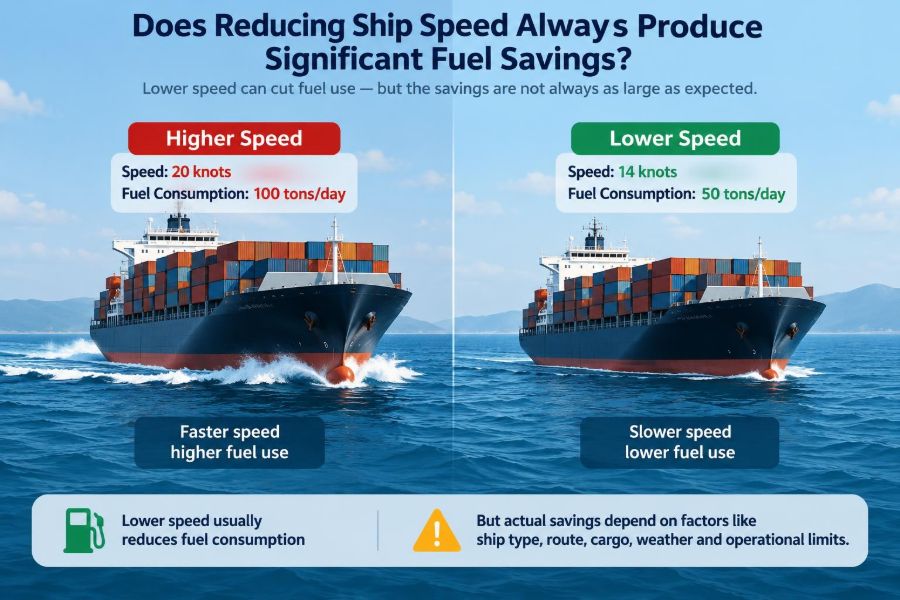
🚒 Does Reducing Ship Speed Always Produce Significant Fuel Savings?
Posted inFeatured

🚒 Does Reducing Ship Speed Always Produce Significant Fuel Savings?

Posted by admin October 8, 2026
Lower speed can cut engine power sharplyβ€”but longer voyages, hotel load, weather, and engine limits can change the answer. Learn what truly drives ship fuel savings. βš“πŸ“‰πŸŒŠ
Read More
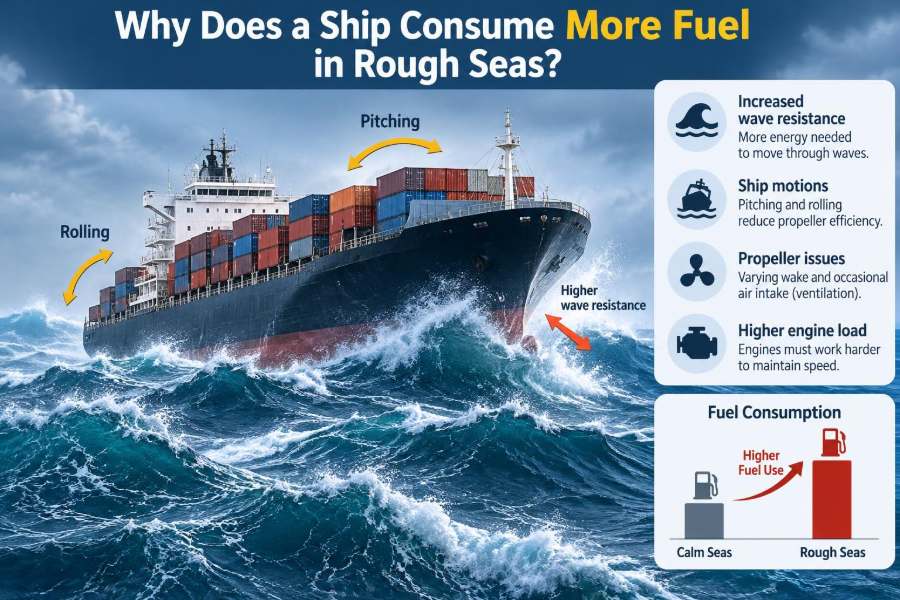
🚒 Why Does a Ship Consume More Fuel in Rough Seas?
Posted inFeatured

🚒 Why Does a Ship Consume More Fuel in Rough Seas?

Posted by admin October 8, 2026
Waves do more than slow a ship down. See how hull motion, propeller losses, wind, steering and engine loading combine to raise fuel use at sea. πŸŒŠβš™οΈπŸ§­
Read More
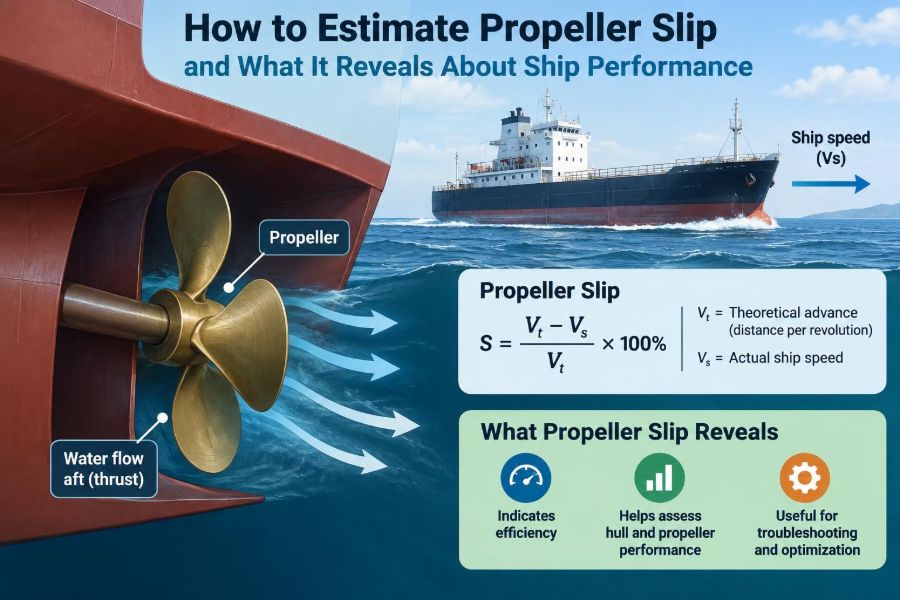
🚒 How to Estimate Propeller Slip and What It Reveals About Ship Performance
Posted inFeatured

🚒 How to Estimate Propeller Slip and What It Reveals About Ship Performance

Posted by admin October 7, 2026
Learn the simple slip calculation, why GPS speed can mislead it, and how trends can reveal fouling, damage, or changing resistance at sea. βš“πŸ“ŠπŸŒŠ
Read More

Posts pagination

Previous page 1 2 3 4 Next page

Recent Posts

  • 🚒 Who Keeps a Ship’s Machinery Running During Weeks or Months at Sea?
  • 🚒 The Evolution of Ship Navigation: From Celestial Observation to Integrated Digital Bridge Systems
  • 🚒 Why Is Hull Trim So Important for Ship Speed, Stability, and Fuel Consumption?
  • 🚒 How Long Can a Cargo Ship Remain at Sea Before Maintenance, Fuel, and Crew Limits Take Over?
  • 🚒 Dealing With Marine Corrosion: How Ships Protect Hulls, Pipes, and Machinery from Seawater

Recent Comments

No comments to show.

Archives

  • November 2026
  • October 2026
  • September 2026
  • August 2026
  • July 2025
  • March 2025
  • February 2025
  • January 2025
  • October 2024
  • September 2024
  • January 2022
  • November 2021
  • October 2021
  • August 2021
  • July 2021
  • June 2021

Categories

  • Advanced
  • Basics
  • Bioremediation
  • Chemistry for Marine Engineering
  • Featured
  • General Concepts
  • Marine Auxiliary Machinery
  • Marine Control Engineering and Automation
  • Marine diesel engine
  • Marine electrical machines
  • Marine Electronics
  • Marine engine
  • Marine Engineering Materials
  • marine history
  • Marine hydraulic and fluid machinery
  • Marine Machinery and Systems Design
  • Marine machinery Drawing
  • Marine manufacturing technology
  • Marine Propulsion
  • Marine Refrigeration and Airconditioning
  • Marine steam engine
  • Marine Vehicles Performance
  • Mathematics for Marine Engineering
  • Mechanics of Marine Machines
  • navel arch
  • Ocean Exploration
  • Offshore Technology
  • safety precautions and watchkeeping
  • Seamanship Elementary Navigation and Survival at Sea
  • Ship Construction
  • ship design
  • Ship Operational Management and IMO Requirements
  • Ships Fire Prevention and Control
  • Stability of ships
  • Uncategorized
  • Underwater Engineering
Copyright 2026 — Marine Engineering. All rights reserved. Bloghash WordPress Theme
Scroll to Top