Skip to content
  • facebook.com
  • twitter.com
  • t.me
  • instagram.com
  • youtube.com
Marine Engineering

Engineering the Power Behind Every Voyage.

Subscribe
  • Home
  • Online Tools
  • Marine Engineering App
  • Home
  • marine fuel systems
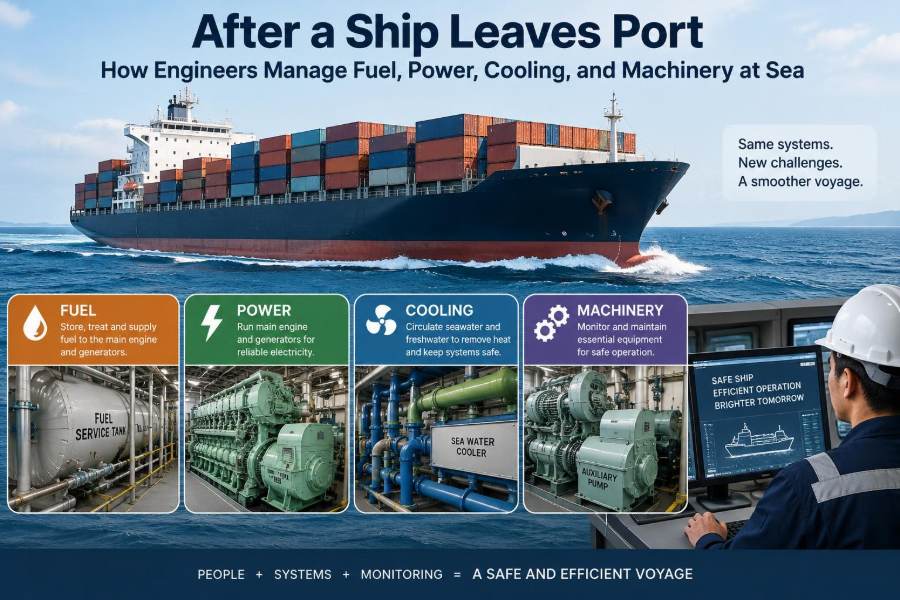
🚒 After a Ship Leaves Port: How Engineers Manage Fuel, Power, Cooling, and Machinery at Sea
Posted inFeatured

🚒 After a Ship Leaves Port: How Engineers Manage Fuel, Power, Cooling, and Machinery at Sea

Posted by admin October 30, 2026
Follow the hidden work below deck: fuel treatment, generator balance, cooling loops, pump checks, alarms, and watchkeeping that keep a vessel moving at sea. πŸŒŠπŸ›’οΈπŸ”§
Read More
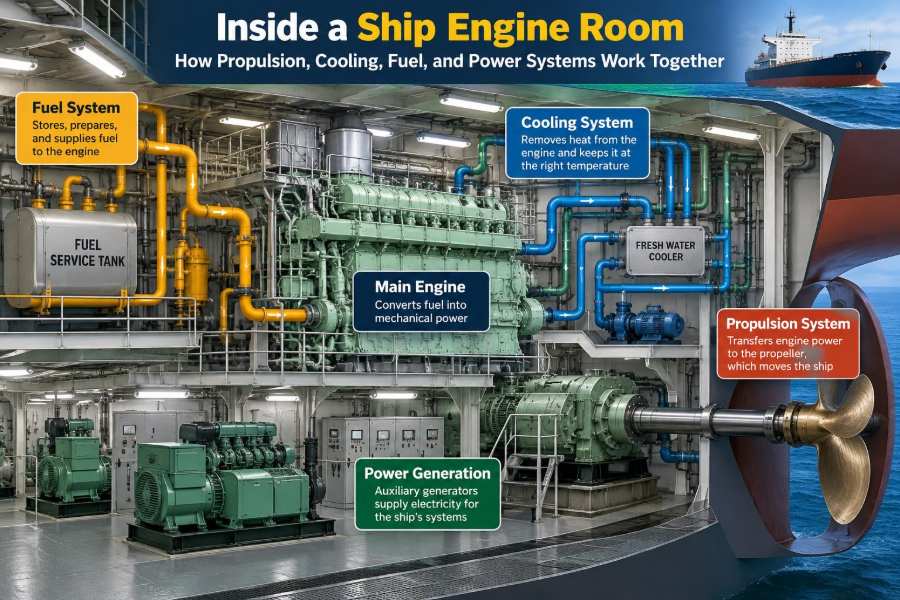
🚒 Inside a Ship Engine Room: How Propulsion, Cooling, Fuel, and Power Systems Work Together
Posted inFeatured

🚒 Inside a Ship Engine Room: How Propulsion, Cooling, Fuel, and Power Systems Work Together

Posted by admin October 29, 2026
Follow the energy path below deckβ€”from fuel treatment and propulsion to cooling loops, generators, alarms, and emergency power. See why every system depends on another. πŸŒŠπŸ”§βš‘
Read More
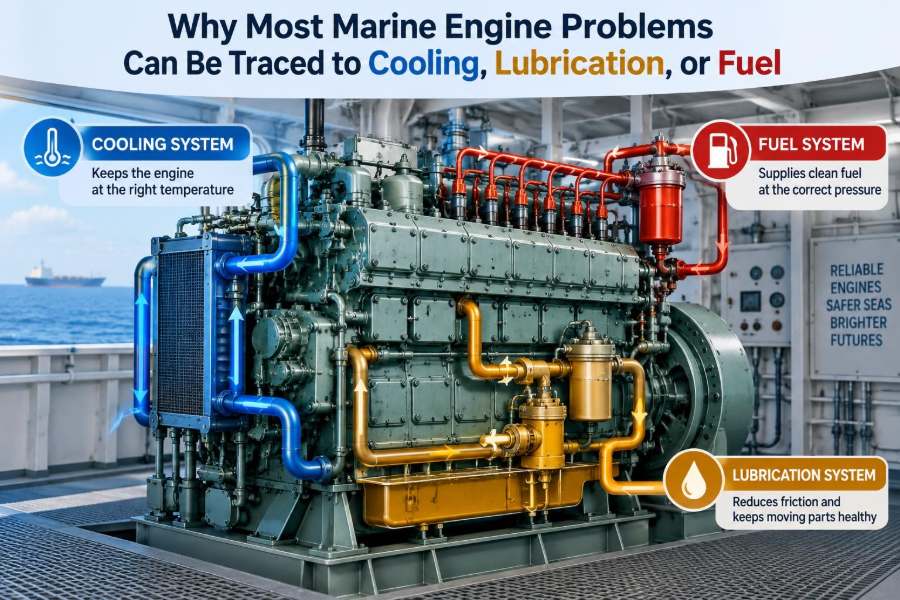
🚒 Why Most Marine Engine Problems Can Be Traced to Cooling, Lubrication, or Fuel
Posted inFeatured

🚒 Why Most Marine Engine Problems Can Be Traced to Cooling, Lubrication, or Fuel

Posted by admin October 4, 2026
High temperature, low oil pressure, and rough running often share hidden causes. Learn the cooling, lubrication, and fuel checks that make troubleshooting more logical. πŸŒ‘οΈπŸ›’οΈβš™οΈ
Read More
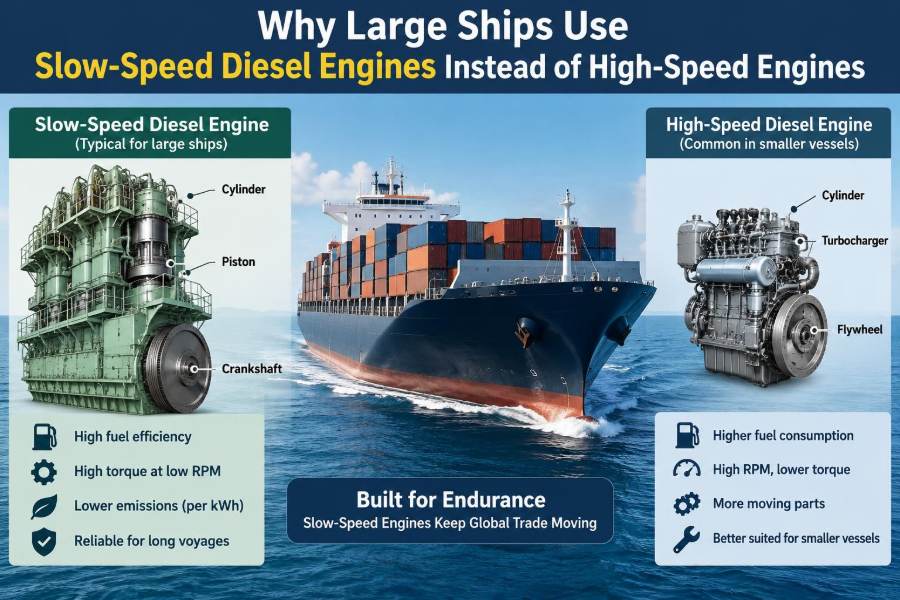
🚒 Why Large Ships Use Slow-Speed Diesel Engines Instead of High-Speed Engines
Posted inFeatured

🚒 Why Large Ships Use Slow-Speed Diesel Engines Instead of High-Speed Engines

Posted by admin September 23, 2026
A ship engine may turn at only a fraction of car-engine rpmβ€”and that is exactly the point. Explore torque, propellers, cavitation, fuel use, and direct drive. βš™οΈπŸŒŠπŸš’
Read More
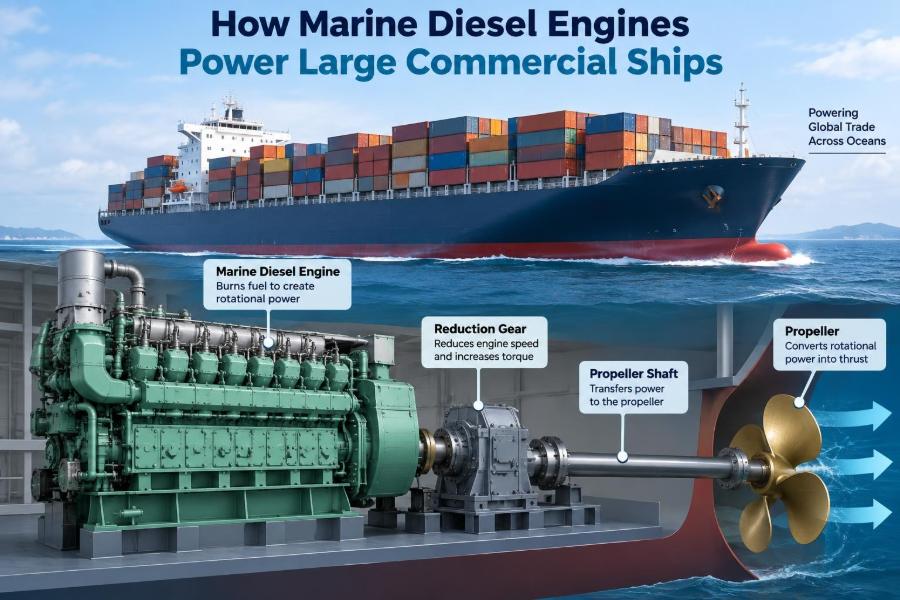
🚒 How Marine Diesel Engines Power Large Commercial Ships
Posted inFeatured

🚒 How Marine Diesel Engines Power Large Commercial Ships

Posted by admin September 18, 2026
Follow the energy path from fuel injector to propeller and see how cooling, turbocharging, shafts, controls, and skilled engineers keep commercial ships moving. πŸŒŠπŸ”§πŸš’
Read More

Recent Posts

  • 🚒 Who Keeps a Ship’s Machinery Running During Weeks or Months at Sea?
  • 🚒 The Evolution of Ship Navigation: From Celestial Observation to Integrated Digital Bridge Systems
  • 🚒 Why Is Hull Trim So Important for Ship Speed, Stability, and Fuel Consumption?
  • 🚒 How Long Can a Cargo Ship Remain at Sea Before Maintenance, Fuel, and Crew Limits Take Over?
  • 🚒 Dealing With Marine Corrosion: How Ships Protect Hulls, Pipes, and Machinery from Seawater

Recent Comments

No comments to show.

Archives

  • November 2026
  • October 2026
  • September 2026
  • August 2026
  • July 2025
  • March 2025
  • February 2025
  • January 2025
  • October 2024
  • September 2024
  • January 2022
  • November 2021
  • October 2021
  • August 2021
  • July 2021
  • June 2021

Categories

  • Advanced
  • Basics
  • Bioremediation
  • Chemistry for Marine Engineering
  • Featured
  • General Concepts
  • Marine Auxiliary Machinery
  • Marine Control Engineering and Automation
  • Marine diesel engine
  • Marine electrical machines
  • Marine Electronics
  • Marine engine
  • Marine Engineering Materials
  • marine history
  • Marine hydraulic and fluid machinery
  • Marine Machinery and Systems Design
  • Marine machinery Drawing
  • Marine manufacturing technology
  • Marine Propulsion
  • Marine Refrigeration and Airconditioning
  • Marine steam engine
  • Marine Vehicles Performance
  • Mathematics for Marine Engineering
  • Mechanics of Marine Machines
  • navel arch
  • Ocean Exploration
  • Offshore Technology
  • safety precautions and watchkeeping
  • Seamanship Elementary Navigation and Survival at Sea
  • Ship Construction
  • ship design
  • Ship Operational Management and IMO Requirements
  • Ships Fire Prevention and Control
  • Stability of ships
  • Uncategorized
  • Underwater Engineering
Copyright 2026 — Marine Engineering. All rights reserved. Bloghash WordPress Theme
Scroll to Top