Skip to content
  • facebook.com
  • twitter.com
  • t.me
  • instagram.com
  • youtube.com
Marine Engineering

Engineering the Power Behind Every Voyage.

Subscribe
  • Home
  • Online Tools
  • Marine Engineering App
  • Home
  • engine room operations
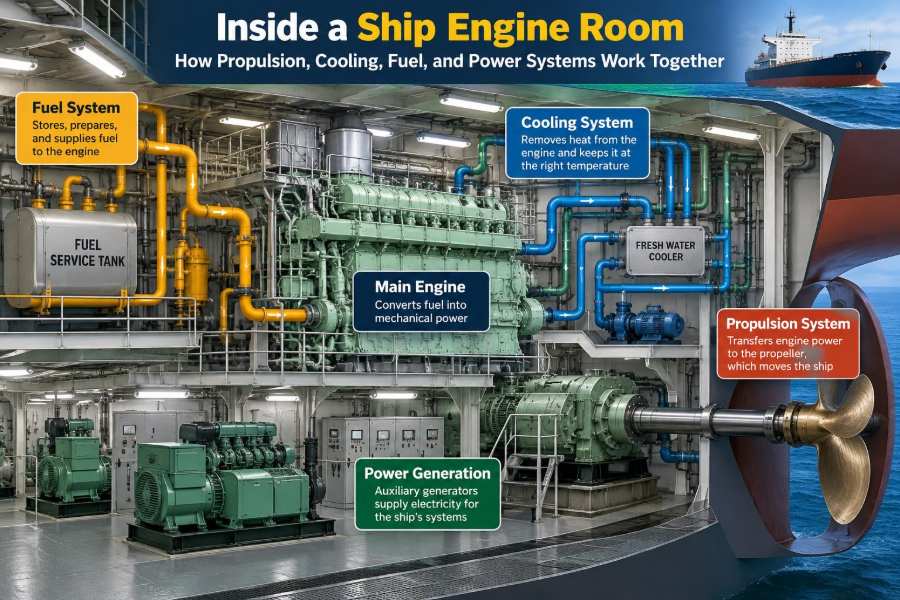
🚒 Inside a Ship Engine Room: How Propulsion, Cooling, Fuel, and Power Systems Work Together
Posted inFeatured

🚒 Inside a Ship Engine Room: How Propulsion, Cooling, Fuel, and Power Systems Work Together

Posted by admin October 29, 2026
Follow the energy path below deckβ€”from fuel treatment and propulsion to cooling loops, generators, alarms, and emergency power. See why every system depends on another. πŸŒŠπŸ”§βš‘
Read More
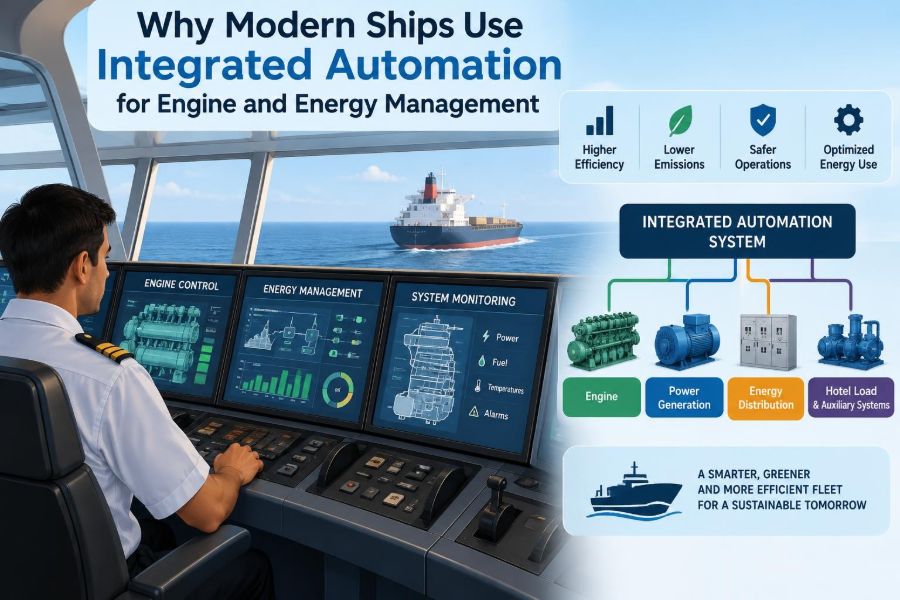
🚒 Why Modern Ships Use Integrated Automation for Engine and Energy Management
Posted inFeatured

🚒 Why Modern Ships Use Integrated Automation for Engine and Energy Management

Posted by admin October 27, 2026
From generator load sharing to batteries and alarm logic, see why connected automation helps crews manage propulsion and energy safelyβ€”without replacing engineering judgement. βš™οΈπŸ”‹πŸŒŠ
Read More
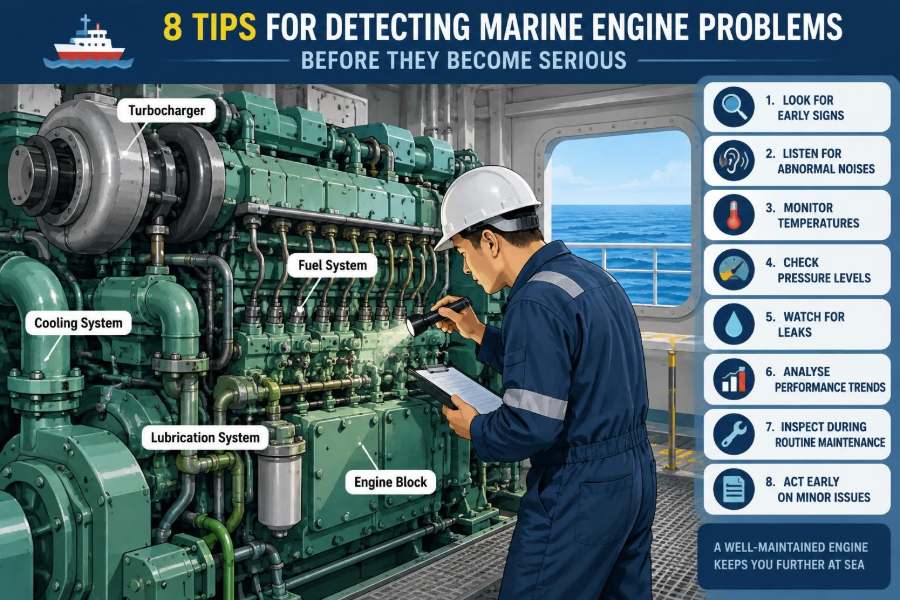
🚒 8 Tips for Detecting Marine Engine Problems Before They Become Serious
Posted inFeatured

🚒 8 Tips for Detecting Marine Engine Problems Before They Become Serious

Posted by admin October 26, 2026
Small changes in sound, heat, pressure, oil, and exhaust can reveal a developing fault. Learn eight practical detection habits for safer, more reliable watchkeeping. πŸ”§βš“πŸ“ˆ
Read More
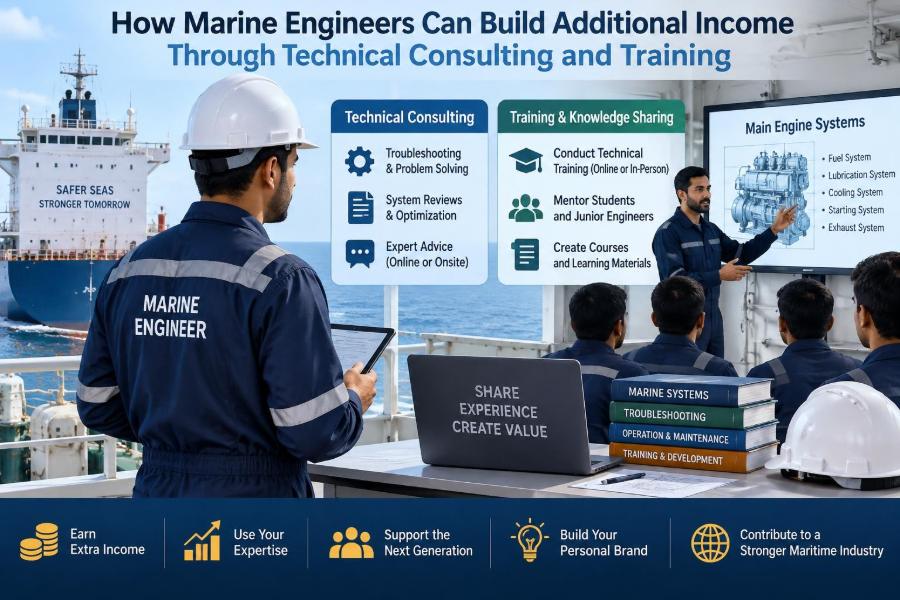
🚒 How Marine Engineers Can Build Additional Income Through Technical Consulting and Training
Posted inFeatured

🚒 How Marine Engineers Can Build Additional Income Through Technical Consulting and Training

Posted by admin October 25, 2026
Learn how marine engineers can turn practical machinery knowledge into responsible consulting and training workβ€”without compromising safety, confidentiality, or their main job. πŸš’πŸ“˜πŸ§­
Read More
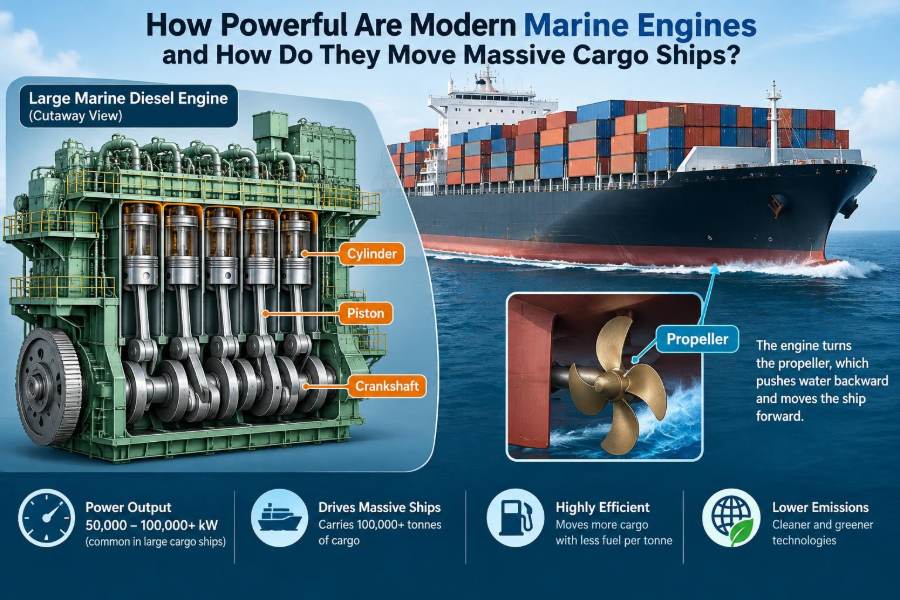
🚒 How Powerful Are Modern Marine Engines and How Do They Move Massive Cargo Ships?
Posted inFeatured

🚒 How Powerful Are Modern Marine Engines and How Do They Move Massive Cargo Ships?

Posted by admin October 16, 2026
From huge low-speed diesels to propellers, torque, cavitation, and fuel-saving tactics, see how marine engineers turn engine power into ocean-crossing thrust. βš™οΈπŸŒŠπŸš’
Read More
🚒 Why Does a Ship Consume More Fuel in Rough Seas?
Posted inFeatured

🚒 Why Does a Ship Consume More Fuel in Rough Seas?

Posted by admin October 8, 2026
Waves do more than slow a ship down. See how hull motion, propeller losses, wind, steering and engine loading combine to raise fuel use at sea. πŸŒŠβš™οΈπŸ§­
Read More
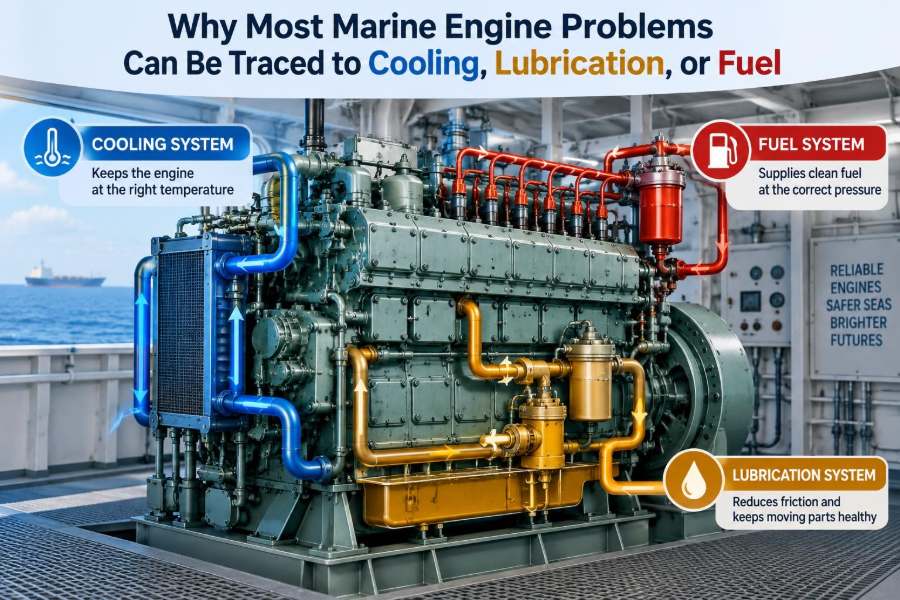
🚒 Why Most Marine Engine Problems Can Be Traced to Cooling, Lubrication, or Fuel
Posted inFeatured

🚒 Why Most Marine Engine Problems Can Be Traced to Cooling, Lubrication, or Fuel

Posted by admin October 4, 2026
High temperature, low oil pressure, and rough running often share hidden causes. Learn the cooling, lubrication, and fuel checks that make troubleshooting more logical. πŸŒ‘οΈπŸ›’οΈβš™οΈ
Read More
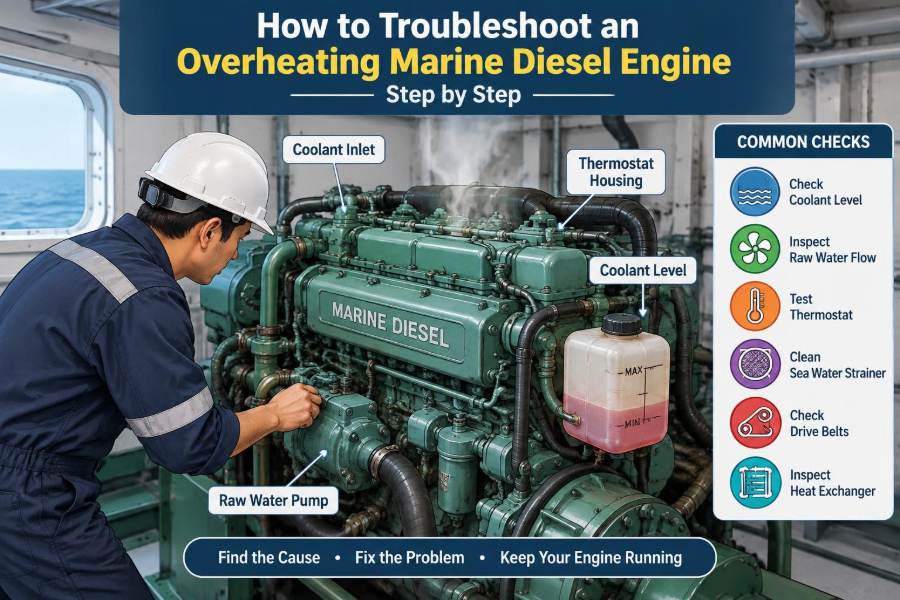
🚒 How to Troubleshoot an Overheating Marine Diesel Engine Step by Step
Posted inFeatured

🚒 How to Troubleshoot an Overheating Marine Diesel Engine Step by Step

Posted by admin September 22, 2026
A high-temperature alarm has many possible causesβ€”from a blocked strainer to an internal fault. Learn a safe, logical troubleshooting sequence before minor heat becomes major damage. πŸ”§πŸŒŠπŸš¨
Read More
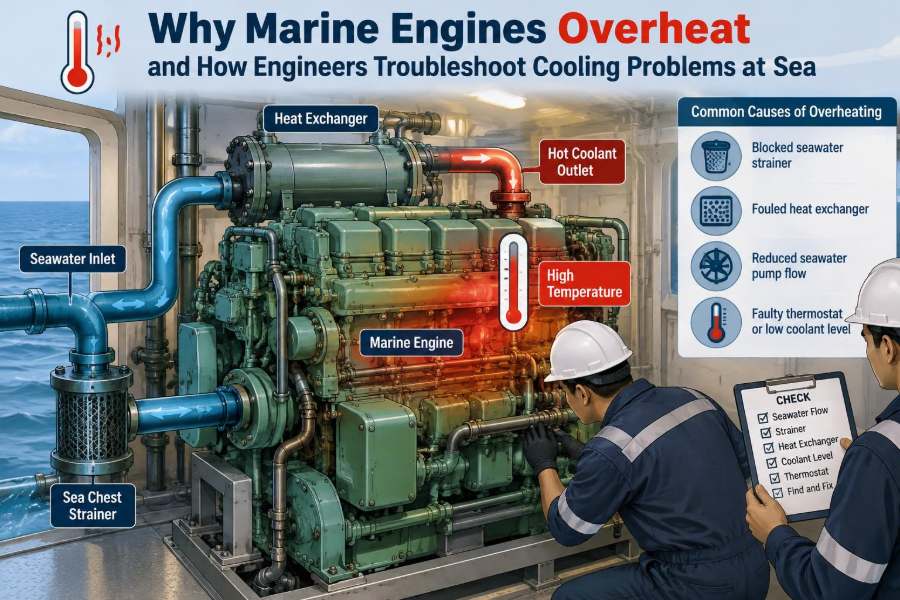
🌑️ Why Marine Engines Overheat and How Engineers Troubleshoot Cooling Problems at Sea
Posted inFeatured

🌑️ Why Marine Engines Overheat and How Engineers Troubleshoot Cooling Problems at Sea

Posted by admin September 21, 2026
From clogged sea strainers to faulty sensors, learn how engineers follow the heat path, read temperature patterns, and troubleshoot cooling faults safely at sea. πŸŒŠπŸ”§πŸš’
Read More
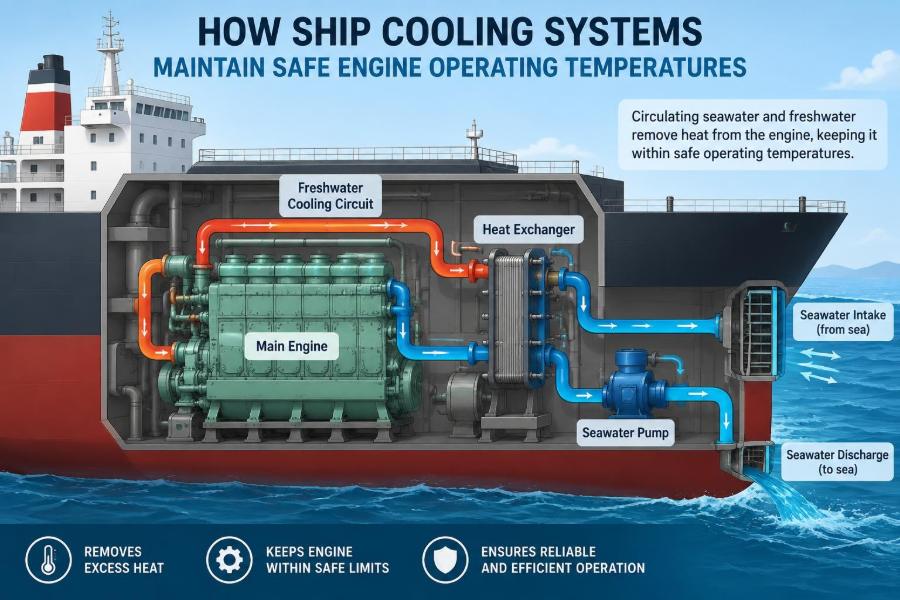
🌊 How Ship Cooling Systems Maintain Safe Engine Operating Temperatures
Posted inFeatured

🌊 How Ship Cooling Systems Maintain Safe Engine Operating Temperatures

Posted by admin September 20, 2026
Follow the heat path through pumps, coolers, valves, freshwater loops, and seawater circuitsβ€”and learn what engine temperature alarms really signal. βš™οΈπŸŒ‘οΈπŸš’
Read More

Posts pagination

1 2 Next page

Recent Posts

  • 🚒 Inside a Ship Engine Room: How Propulsion, Cooling, Fuel, and Power Systems Work Together
  • 🚒 How It’s Built: Inside the Construction of a Massive Cargo Ship
  • 🚒 Which Approach Fits Modern Shipping: LNG, Methanol, Ammonia, or Hybrid Propulsion?
  • 🚒 Why Modern Ships Use Integrated Automation for Engine and Energy Management
  • 🚒 A Smarter Way to Cut Ship Fuel Consumption Using Operational Data

Recent Comments

No comments to show.

Archives

  • October 2026
  • September 2026
  • August 2026
  • July 2025
  • March 2025
  • February 2025
  • January 2025
  • October 2024
  • September 2024
  • January 2022
  • November 2021
  • October 2021
  • August 2021
  • July 2021
  • June 2021

Categories

  • Advanced
  • Basics
  • Bioremediation
  • Chemistry for Marine Engineering
  • Featured
  • General Concepts
  • Marine Auxiliary Machinery
  • Marine Control Engineering and Automation
  • Marine diesel engine
  • Marine electrical machines
  • Marine Electronics
  • Marine engine
  • Marine Engineering Materials
  • marine history
  • Marine hydraulic and fluid machinery
  • Marine Machinery and Systems Design
  • Marine machinery Drawing
  • Marine manufacturing technology
  • Marine Propulsion
  • Marine Refrigeration and Airconditioning
  • Marine steam engine
  • Marine Vehicles Performance
  • Mathematics for Marine Engineering
  • Mechanics of Marine Machines
  • navel arch
  • Ocean Exploration
  • Offshore Technology
  • safety precautions and watchkeeping
  • Seamanship Elementary Navigation and Survival at Sea
  • Ship Construction
  • ship design
  • Ship Operational Management and IMO Requirements
  • Ships Fire Prevention and Control
  • Stability of ships
  • Uncategorized
  • Underwater Engineering
Copyright 2026 — Marine Engineering. All rights reserved. Bloghash WordPress Theme
Scroll to Top