Skip to content
  • facebook.com
  • twitter.com
  • t.me
  • instagram.com
  • youtube.com
Marine Engineering

Engineering the Power Behind Every Voyage.

Subscribe
  • Home
  • Online Tools
  • Marine Engineering App
  • Home
  • Ship Speed
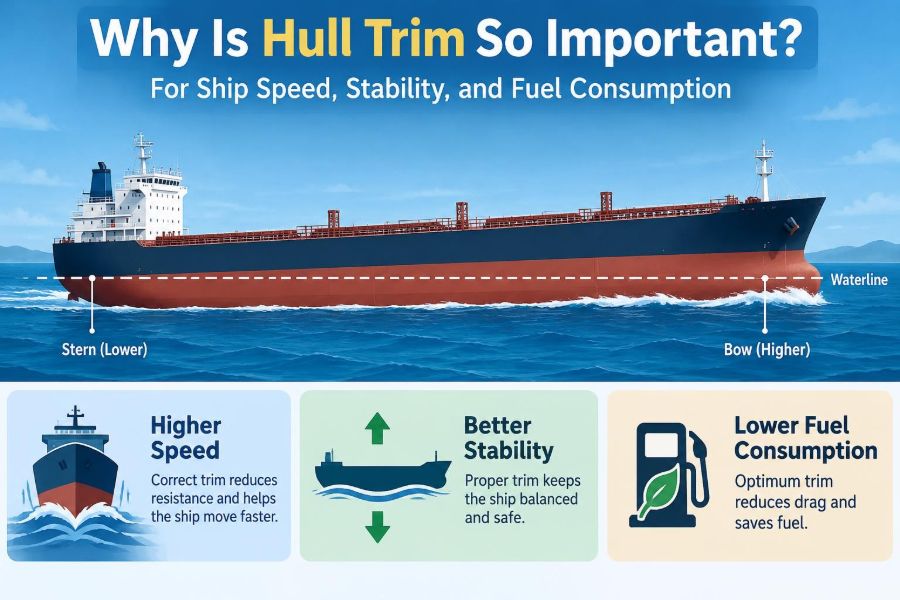
🚒 Why Is Hull Trim So Important for Ship Speed, Stability, and Fuel Consumption?
Posted inFeatured

🚒 Why Is Hull Trim So Important for Ship Speed, Stability, and Fuel Consumption?

Posted by admin November 16, 2026
A few centimeters of draft difference can affect resistance, propeller inflow, stability, and handling. Learn how crews balance safe trim with efficient ship performance βš“πŸŒŠβ›½
Read More
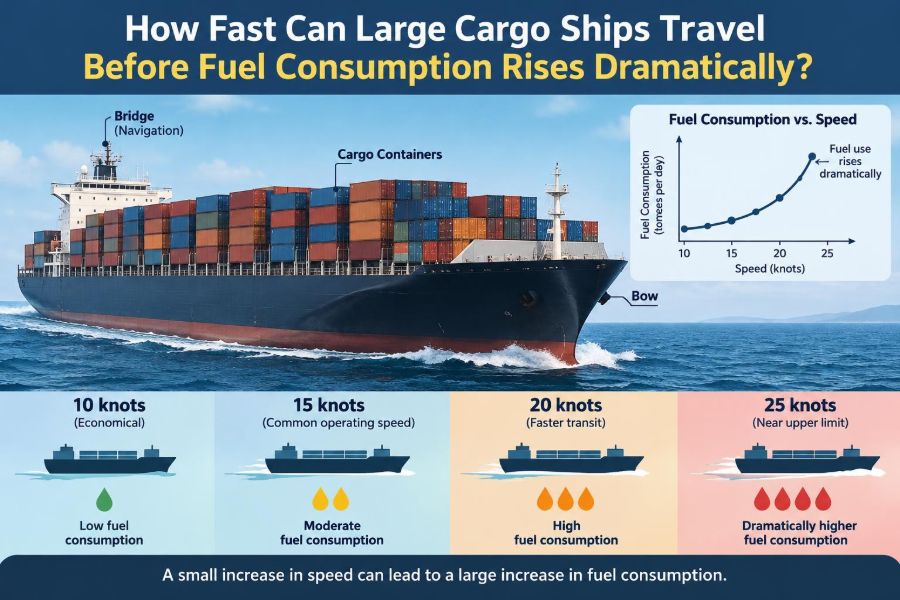
🚒 How Fast Can Large Cargo Ships Travel Before Fuel Consumption Rises Dramatically?
Posted inFeatured

🚒 How Fast Can Large Cargo Ships Travel Before Fuel Consumption Rises Dramatically?

Posted by admin November 9, 2026
A cargo ship’s final few knots can demand far more power than expected. Learn how hull resistance, propellers, weather, and voyage planning shape fuel use. πŸŒŠπŸ›’οΈπŸ“ˆ
Read More
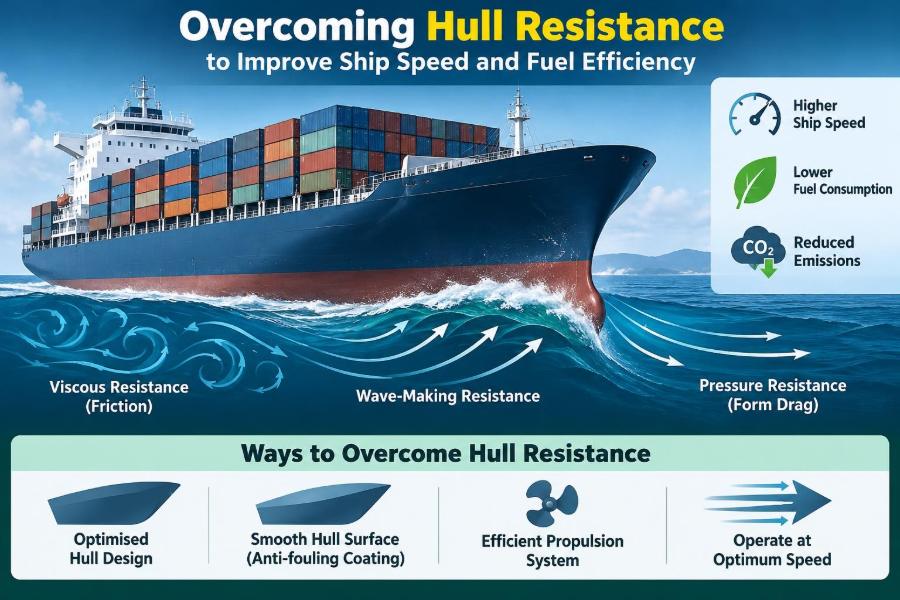
🚒 Overcoming Hull Resistance to Improve Ship Speed and Fuel Efficiency
Posted inFeatured

🚒 Overcoming Hull Resistance to Improve Ship Speed and Fuel Efficiency

Posted by admin October 19, 2026
Hull drag quietly raises fuel use, power demand, and emissions. Learn how fouling, trim, waves, propellers, and speed interactβ€”and what crews can do about it. πŸŒŠβš™οΈπŸ“‰
Read More
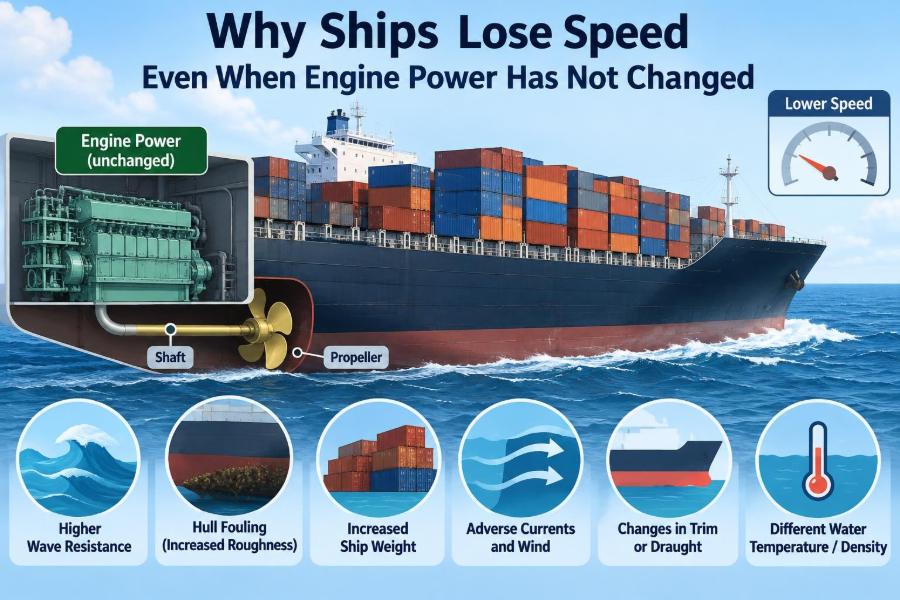
🚒 Why Ships Lose Speed Even When Engine Power Has Not Changed
Posted inFeatured

🚒 Why Ships Lose Speed Even When Engine Power Has Not Changed

Posted by admin October 5, 2026
Same rpm, same engine loadβ€”yet less speed? Discover how currents, waves, hull fouling, propeller condition, trim, and data errors reshape ship performance. πŸŒŠβš™οΈπŸ“Š
Read More

Recent Posts

  • 🚒 Why Is Hull Trim So Important for Ship Speed, Stability, and Fuel Consumption?
  • 🚒 How Long Can a Cargo Ship Remain at Sea Before Maintenance, Fuel, and Crew Limits Take Over?
  • 🚒 Dealing With Marine Corrosion: How Ships Protect Hulls, Pipes, and Machinery from Seawater
  • 🚒 How to Measure Ship Hull Fouling and Its Effect on Speed and Fuel Consumption
  • 🚒 Understanding Free Surface Effect and Why Partially Filled Tanks Can Reduce Ship Stability

Recent Comments

No comments to show.

Archives

  • November 2026
  • October 2026
  • September 2026
  • August 2026
  • July 2025
  • March 2025
  • February 2025
  • January 2025
  • October 2024
  • September 2024
  • January 2022
  • November 2021
  • October 2021
  • August 2021
  • July 2021
  • June 2021

Categories

  • Advanced
  • Basics
  • Bioremediation
  • Chemistry for Marine Engineering
  • Featured
  • General Concepts
  • Marine Auxiliary Machinery
  • Marine Control Engineering and Automation
  • Marine diesel engine
  • Marine electrical machines
  • Marine Electronics
  • Marine engine
  • Marine Engineering Materials
  • marine history
  • Marine hydraulic and fluid machinery
  • Marine Machinery and Systems Design
  • Marine machinery Drawing
  • Marine manufacturing technology
  • Marine Propulsion
  • Marine Refrigeration and Airconditioning
  • Marine steam engine
  • Marine Vehicles Performance
  • Mathematics for Marine Engineering
  • Mechanics of Marine Machines
  • navel arch
  • Ocean Exploration
  • Offshore Technology
  • safety precautions and watchkeeping
  • Seamanship Elementary Navigation and Survival at Sea
  • Ship Construction
  • ship design
  • Ship Operational Management and IMO Requirements
  • Ships Fire Prevention and Control
  • Stability of ships
  • Uncategorized
  • Underwater Engineering
Copyright 2026 — Marine Engineering. All rights reserved. Bloghash WordPress Theme
Scroll to Top